What Is Paint Correction? A Complete Beginner's Guide
If you've never had it done, "paint correction" can sound vague or overhyped. Here's a plain-language explanation of what it actually is and does.
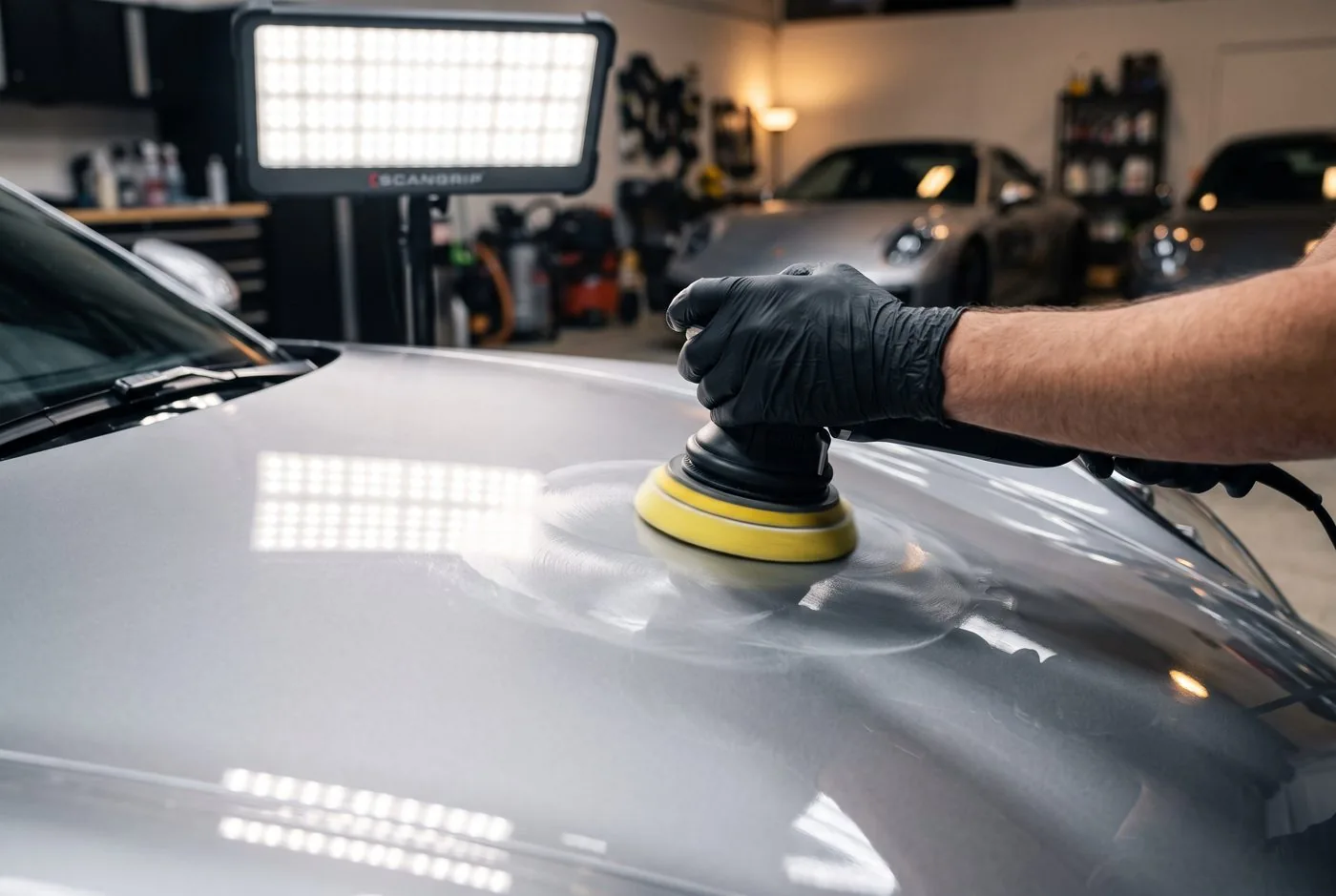
Paint correction gets mentioned constantly in detailing conversations, but a lot of first-time customers aren't totally sure what it actually involves — or whether their car even needs it. Here's a start-from-scratch explanation.
The short version
Paint correction is a machine polishing process that removes a very thin layer of a vehicle's clear coat to level out surface imperfections — swirl marks, light scratches, water spot etching, and oxidation — restoring gloss and clarity without repainting the vehicle.
Why paint gets these defects in the first place
Automotive paint's outer clear coat is a hard but not indestructible layer. Over time, it accumulates micro-scratches from washing (especially automated brush washes and improper hand-drying), UV-driven oxidation from sun exposure, and etching from things like water spots, tree sap, or bird droppings left too long. None of this means the paint is failing structurally — it's cosmetic damage to the outermost layer, which is exactly what correction addresses.
What correction actually involves
- Wash and decontamination. The vehicle is thoroughly washed and clay-bar treated to remove bonded surface contaminants before any polishing begins — skipping this step risks grinding contaminants into the paint during polishing.
- Paint thickness measurement. A trained technician checks clear coat thickness in multiple spots to understand how much material is safely available to work with.
- Test spot. A small area is polished first to determine which combination of pad and compound will achieve the needed correction without excessive material removal.
- Machine polishing in stages. Using a dual-action or rotary polisher, progressively finer compounds and pads level the clear coat's surface, removing the microscopic peaks and valleys that scatter light and cause dullness or visible swirling.
- Wipe-down and inspection. Between passes, the surface is wiped clean and inspected under proper lighting to check progress before moving to the next stage or finishing.
Levels of correction
Not every vehicle needs the same intensity of work:
- One-stage / light correction: Addresses light swirling and restores gloss without heavy material removal — appropriate for well-maintained vehicles with minor defects.
- Multi-stage / heavy correction: Uses a cutting compound first to remove deeper scratches and oxidation, followed by finer polishing stages to refine the finish — appropriate for neglected paint or vehicles with more significant defects.
What correction can't fix
It's worth being direct about the limits. Correction can't repair deep scratches that have gone through the clear coat into the base color coat (those need touch-up paint or a repaint), and it can't add material back to paint that's already thin from prior aggressive polishing. A responsible technician will tell you honestly if a defect is beyond what correction can safely address rather than attempting it anyway.
Does correction remove clear coat permanently?
Yes, in a very small, controlled amount — that's inherently how the process works. This is exactly why paint thickness measurement matters: it's what keeps correction within safe limits rather than removing more material than the clear coat can spare.
Correction doesn't add anything to your paint — it levels what's already there. That's why prep and measurement matter as much as the polishing itself.
What typically comes after correction
Because correction removes existing protection along with the defects, most vehicles get some form of protection applied immediately after — wax, sealant, or most commonly ceramic coating, which locks in the corrected finish and helps slow how quickly new swirl marks and oxidation accumulate going forward. If you are comparing the two services, see our Dallas paint correction and ceramic coating guide.
Quick answers
Not necessarily — correction is only needed if actual defects like swirl marks, etching, or oxidation are present. A newer, well-maintained vehicle may not need it yet.
Correction is usually the most time-intensive part of the appointment, especially for multi-stage work — a single-stage light correction might take a couple of hours, while heavier multi-stage work can take a full day.
More from the Car Care Guide
Swirl Marks Explained: What Causes Them and How Paint Correction Fixes Them
Why swirl marks happen, why they're most visible in direct sun, and what paint correction actually does to remove them.
Ceramic Coating vs. Paint Protection Film
They get lumped together constantly — here's how they actually differ.
Get a paint correction quote for your vehicle
Choose a polishing scope after inspection
The next decision is whether one polishing stage meets your finish goal or a separate refinement stage is justified. Compare one-step and two-step paint correction, then request a paint correction assessment.