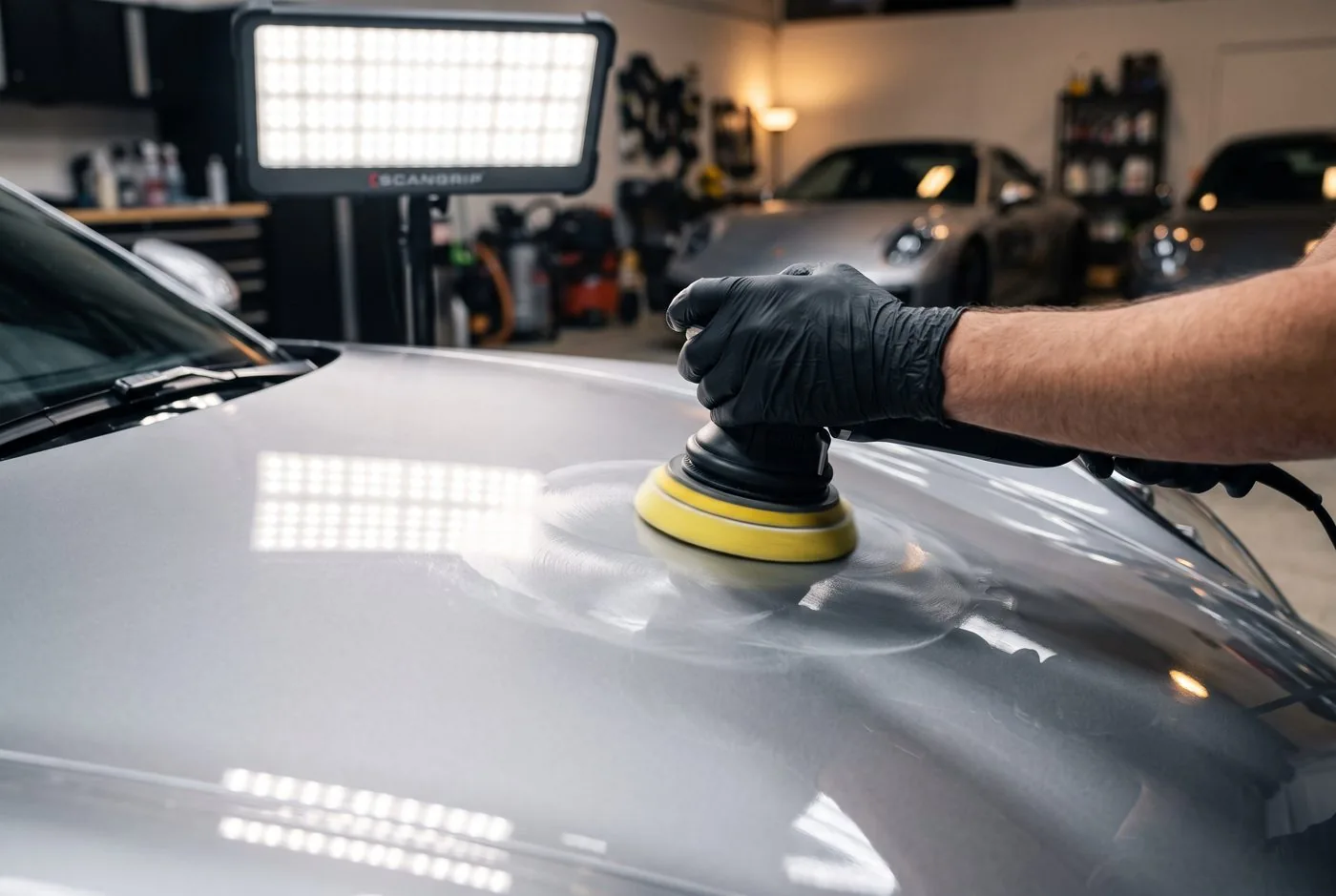
Choose one-step paint correction when a test spot produces the finish you want with a single polishing stage. Consider two-step correction when the paint needs a separate cutting stage followed by refinement. The better choice depends on the paint and your expectations, so ask to see a test spot before approving the work.
What do “one-step” and “two-step” actually mean?
A step is a polishing stage. A one-step service uses one polishing approach to balance defect reduction and the final finish. A two-step service separates the cutting work from a finer finishing pass. Washing, removing bonded contamination, masking trim, and applying protection are separate tasks; a “two-step package” may include several preparation tasks without changing the meaning of the polishing stages.
Product descriptions illustrate the distinction. Meguiar’s describes its M105 compound as a defect-removal product and its M200 polish as a product for light defects and finishing. These examples explain the tasks; they do not prescribe products for your vehicle or guarantee a result.
Compare the result you want, rather than the stage count
| Decision | One-step discussion | Two-step discussion |
|---|---|---|
| Your goal | A noticeable improvement that fits your maintenance plans | A more demanding finish goal that needs separate refinement |
| Evidence | Does the test spot look acceptable after one stage? | Does a second stage improve the test spot enough to justify it? |
| Limits | Which visible defects will remain? | Which defects still should be left alone? |
| Written scope | Specify preparation and protection separately | Specify cutting, refinement, preparation, and protection separately |
Imagine two Dallas drivers looking at the same wash marks. One wants cleaner reflections on a daily commuter and expects to keep using the same wash routine. The other wants a carefully inspected finish before a coating and is ready to change how the car is washed. Their priorities differ. That is a useful conversation to have before choosing a package.
Use a test spot to set the stopping point
Ask the detailer to inspect the paint and explain the test area in the same lighting used to assess the rest of the car. Look at the result from more than one angle. Discuss which marks remain and whether pursuing them is appropriate. A stage count alone tells you little about the condition of a particular panel.
A written quote should describe the agreed goal without promising a universal percentage of scratch removal. Ask whether photographs will document the test spot and finished panels. If the paint has been repaired or previously polished, disclose that before work starts. If you do not know its history, say so.
What if the marks are chips, peeling paint, or film damage?
Show those areas during inspection rather than assuming a larger correction package will resolve them. Our paint correction service guide explains the limits of polishing. A separate repair assessment may be needed. For a matte finish or a wrapped panel, start with the matte paint and wrap care guide before discussing any abrasive work.
Does ceramic coating automatically require two steps?
Ask what preparation the coating product requires and which visible defects you want addressed. Do not approve extra polishing solely because the package includes a coating. The quote should identify the preparation, desired appearance, and coating as separate decisions. Read how correction and coating fit together if you are comparing both services.
A useful quote request
Send the vehicle’s make, model, and year; photographs in clear light; any repaint or polishing history; the marks that bother you; and whether you want a daily-driver improvement or a more demanding finish. Ask: “Can we compare a one-stage test spot with a refined result before deciding?”
For the rest of the buying process, use our paint correction quote checklist. SJ Dallas Auto Detailing routes quote requests; the performing detailer confirms availability, inspection findings, price, and scope.
This is an editorial buying and care guide, not a record of completed customer work. Product and vehicle instructions take priority. Images are illustrative.