Paint Protection
Paint correction vs. ceramic coating in Dallas: which comes first?
They are often sold together, but they solve different problems. Here is how to decide what your vehicle actually needs before you pay for either service.
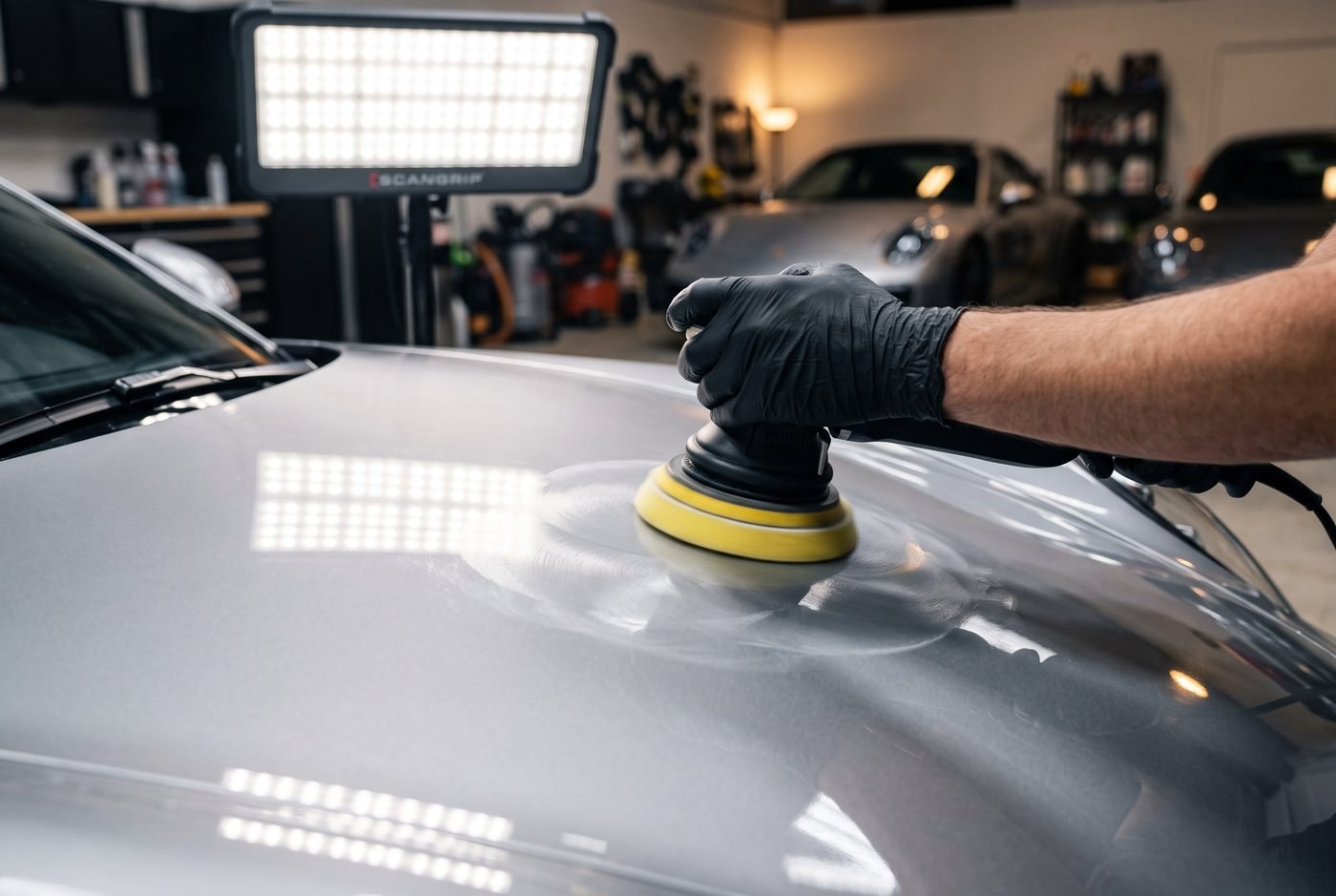
They are often sold together, but they solve different problems. Here is how to decide what your vehicle actually needs before you pay for either service.
Paint correction comes before ceramic coating. Correction improves the paint by reducing clear-coat defects such as swirl marks, while ceramic coating adds a protective, hydrophobic layer to the finish that remains. A coating does not erase defects underneath it, so the paint should be inspected and corrected first when appearance matters.
Think of the two services as preparation and protection. Paint correction uses machine polishing to level or reduce defects in the clear coat. Ceramic coating is applied after the paint is prepared so it can bond to a clean surface and make future maintenance easier.
That distinction matters because the word “protection” can make a coating sound like a repair. It is not. If direct sun shows a web of fine swirls across the hood, coating the hood will not make those swirls disappear. The visible finish underneath still matters.
Paint correction is aimed at cosmetic defects within the clear coat. The exact result depends on paint thickness, defect depth, previous polishing, and the finish being requested.
Correction cannot repair a dent, peeling clear coat, or a scratch that has cut through the clear coat into the color layer or metal. Those conditions may need touch-up paint, bodywork, or refinishing. A responsible quote should leave room for that answer.
A ceramic coating forms a thin bonded layer over prepared paint. It can help water and light grime release more easily, support gloss retention, and give you more time to remove contaminants before they etch the surface. It does not make the vehicle scratch-proof.
Coating is most useful for an owner who is willing to keep washing the car. Pollen, road film, bird droppings, and dust still land on coated paint. The maintenance wash becomes easier; it does not become optional. For a plain-language explanation of the trade-off, see whether ceramic coating is worth it in Dallas heat.
| Question | Paint correction | Ceramic coating |
|---|---|---|
| Main job | Improve paint clarity by reducing surface defects | Protect and make the prepared surface easier to maintain |
| Fixes existing swirls? | Often, if they are within the clear coat | No |
| Helps with water and grime? | Only indirectly through a cleaner surface | Yes, through hydrophobic behavior and easier washing |
| Prevents rock chips? | No | No; paint protection film is designed for impact protection |
| When it happens | Before protection, when needed | After cleaning, decontamination, and paint preparation |
Dallas–Fort Worth vehicles spend long stretches exposed to heat, sun, pollen, sudden rain, and highway contamination. The National Weather Service’s 1991–2020 normals list July and August normal highs near 95.6°F and 95.8°F at DFW, which helps explain why paint and interior materials take a regular beating here. See the DFW climate normals.
Those conditions make a coating appealing for some owners, but they do not change the order of work. A coated car still needs careful washing. A corrected car still needs protection if you want to slow the return of contamination and wash marring.
If you see swirls every time the sun hits the hood, correction addresses the immediate problem. It can also make sense before selling a vehicle, before applying a coating, or when an older finish has become hazy and dull.
If the paint is already in good shape and you want easier washing and a longer-lasting finish, coating may be the better fit. The installer should still inspect the paint; “newer” does not guarantee “defect-free.”
For a vehicle you plan to keep, correction followed by coating is the complete sequence. The correction improves what you see. The coating helps you maintain that finish, provided the vehicle receives regular, gentle washes.
Send the vehicle type, location, paint concerns, and the service you are considering through the quote form. If you are in Dallas, start with the Dallas detailing service area; requests from nearby DFW communities can be reviewed through the full service-area directory.
Paint correction comes first. The paint is washed, decontaminated, inspected, and polished before the ceramic coating is applied.
No. It protects the finish underneath it. Paint correction is used to reduce clear-coat defects before coating.
Not automatically. The decision depends on the actual paint condition, the finish you want, and how long you plan to keep the vehicle.
Tell us what you see on the vehicle and we’ll help you request the right Dallas-area option.