Swirl Marks Explained: What Causes Them and How Paint Correction Fixes Them
Those fine, spiderweb-like scratches that only show up in direct sunlight have a specific cause — and a specific fix. Here's the honest version of both.
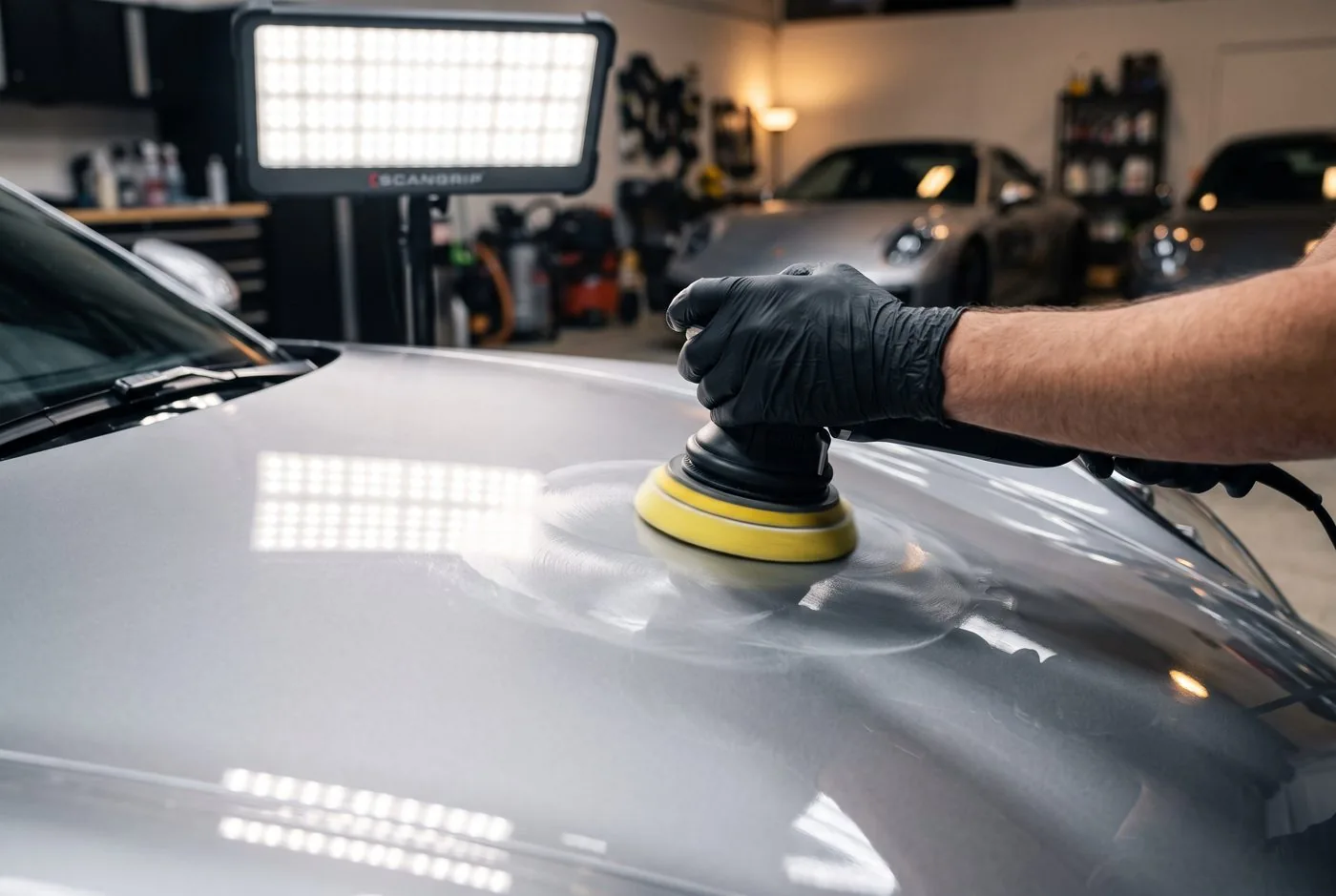
Swirl marks are one of the most common paint complaints we hear, and also one of the most misunderstood. Owners often assume their paint is "just getting old," when in most cases the marks are self-inflicted damage from wash technique — entirely preventable, and entirely fixable.
What swirl marks actually are
Swirl marks are fine, circular micro-scratches in the clear coat — the transparent top layer of automotive paint that provides gloss and UV protection. Individually they're too small to see under normal lighting, but under direct sun or bright garage lighting, hundreds of them scatter light in a way that creates the telltale spiderweb pattern, especially visible on dark colors.
What actually causes them
- Automated brush car washes. The brushes at most touchless-adjacent automated washes aren't actually touchless, and they're shared across every vehicle that goes through — picking up grit from previous cars and dragging it across your paint.
- Dirty wash mitts and towels. Reusing a wash mitt without properly rinsing it, or drying with a towel that's picked up grit, grinds contaminants into the clear coat with every pass.
- Improper drying technique. Wiping a wet car with a single towel in long strokes, rather than blotting or using proper microfiber technique, is one of the most common causes of fine, directional swirling.
- Dust wiping. Wiping a dusty or pollen-covered car "dry" with a cloth, rather than washing it first, is essentially sanding the paint with whatever's sitting on the surface.
Why Dallas heat makes swirl marks more noticeable
Swirl marks are always there once they've happened, but North Texas's intense summer sun makes them dramatically more visible — direct, high-angle sunlight is exactly the lighting condition that reveals fine scratch patterns most clearly. A car that looked fine in a garage can look heavily swirled the moment it's parked in direct August sun.
How paint correction actually removes them
Paint correction uses a dual-action or rotary polisher with cutting or polishing compounds to level the clear coat's surface — removing a microscopically thin layer to eliminate the scratch pattern rather than filling or hiding it. Depending on severity, this can take one polishing stage (light correction) or multiple stages with progressively finer compounds (heavier correction) to fully restore clarity and gloss.
This is a genuinely different process from waxing or applying a filler-based product, which can temporarily mask light swirling by filling the scratches with oils that wash away within weeks. Correction actually removes the defect from the clear coat.
Can correction go too far?
Yes — clear coat is a finite, measurable layer, and removing material to correct paint isn't unlimited. A properly trained technician measures paint thickness before aggressive correction and stops well short of any risk to the clear coat's integrity. This is part of why correction should be done by someone experienced with the process rather than attempted with a random orbital polisher and no baseline measurement.
Swirl marks aren't a sign your paint is failing — they're almost always a sign of wash technique, and they're almost always fixable.
Preventing swirl marks after correction
- Switch to hand washing with the two-bucket method and a clean, dedicated wash mitt
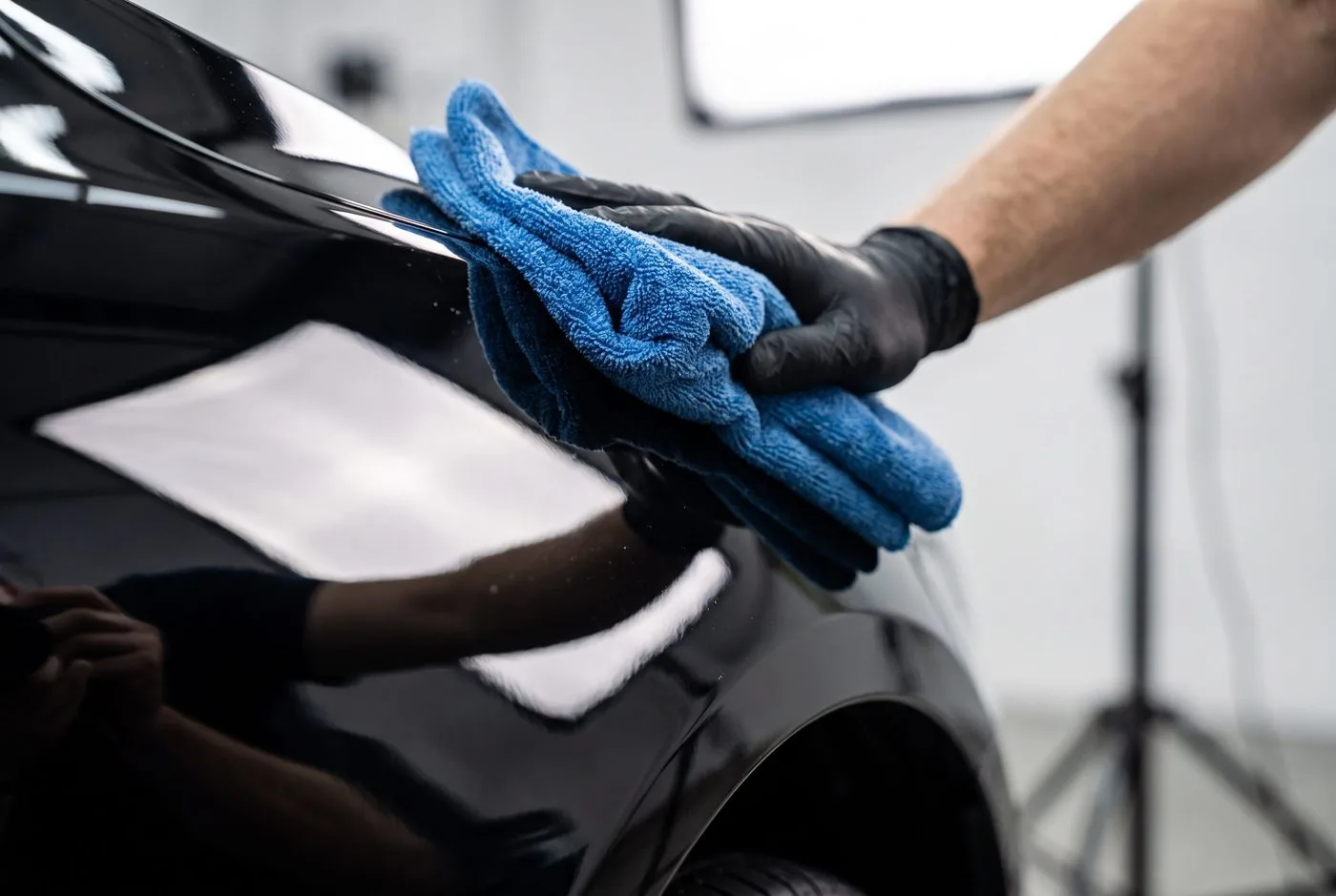
- Dry with clean, high-quality microfiber towels — never the same towel used to wipe dust
- Avoid automated brush washes entirely; touchless washes are a safer (though less thorough) alternative
- Consider a ceramic coating after correction — it doesn't prevent swirl marks from improper technique, but it does make dirt release more easily, reducing how much scrubbing a wash actually requires
Quick answers
No — wax and sealant can temporarily mask light swirling by filling scratches with oils, but the marks return once that product wears off within weeks. Only machine paint correction actually removes the scratch pattern.
Park the car in direct sunlight and look at a dark-colored panel from an angle — swirl marks show up as a fine, circular scratch pattern that's usually invisible under garage lighting or on lighter colors.
More from the Car Care Guide
5 Signs Your Car Needs Paint Correction
The clear signs that a car's paint needs correction rather than just a wash or wax — and how to check for them yourself.
Ceramic Coating vs. Paint Protection Film
They get lumped together constantly — here's how they actually differ.