Water Spots on Car Paint: What Causes Them and How to Remove Them
Not all water spots are equal — some wipe off in seconds, others are permanently etched into the clear coat. Here's how to tell the difference and fix each one.
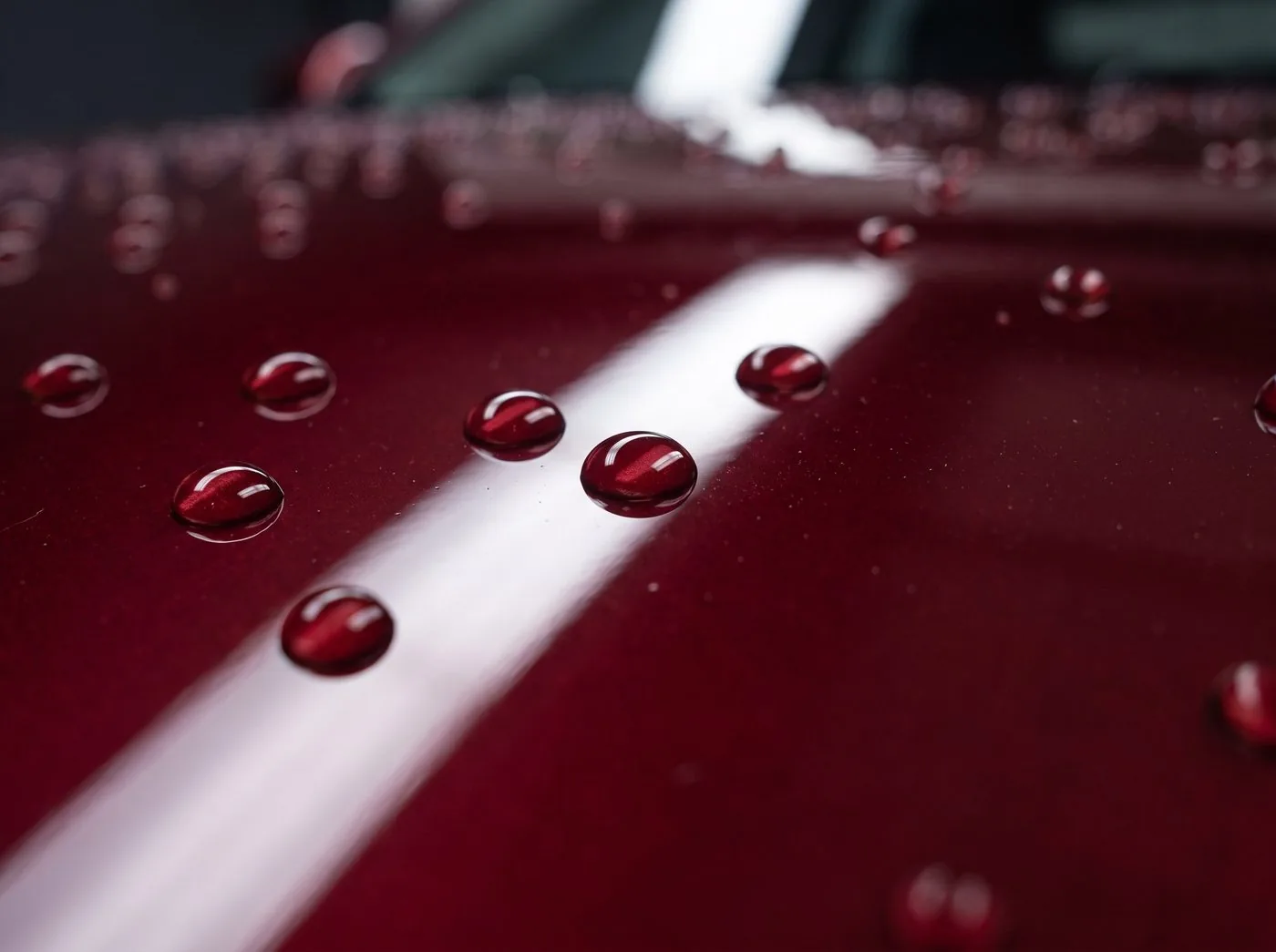
Water spots are one of the most common paint complaints in North Texas, thanks to a combination of hard-ish tap water, sudden thunderstorms, and a climate that dries water onto paint fast in direct summer sun. Here's what's actually happening and how to deal with it correctly.
Two very different types of water spots
The critical distinction that determines how to fix a water spot is whether it's mineral deposit sitting on the surface, or actual etching into the clear coat itself.
- Surface mineral deposits form when water containing dissolved minerals evaporates and leaves those minerals behind on the paint. These sit on top of the clear coat and, while stubborn, are removable without damaging anything underneath.
- Etched water spots happen when mineral-laden water sits on hot paint in direct sun long enough for a mild acidic reaction to actually affect the clear coat's surface, leaving a permanent ring or spot that a wash won't remove.
Why Dallas conditions make this worse
Two North Texas-specific factors accelerate water spotting compared to milder or drier climates: sudden spring and summer thunderstorms that leave rainwater on paint already hot from direct sun, and the sheer intensity of that sun accelerating evaporation — the faster water evaporates, the more concentrated the mineral residue left behind, and the higher the risk of etching before anyone gets a chance to wipe it off.
Removing fresh surface spots
- Rinse the area with plain water first to loosen any loose mineral deposit
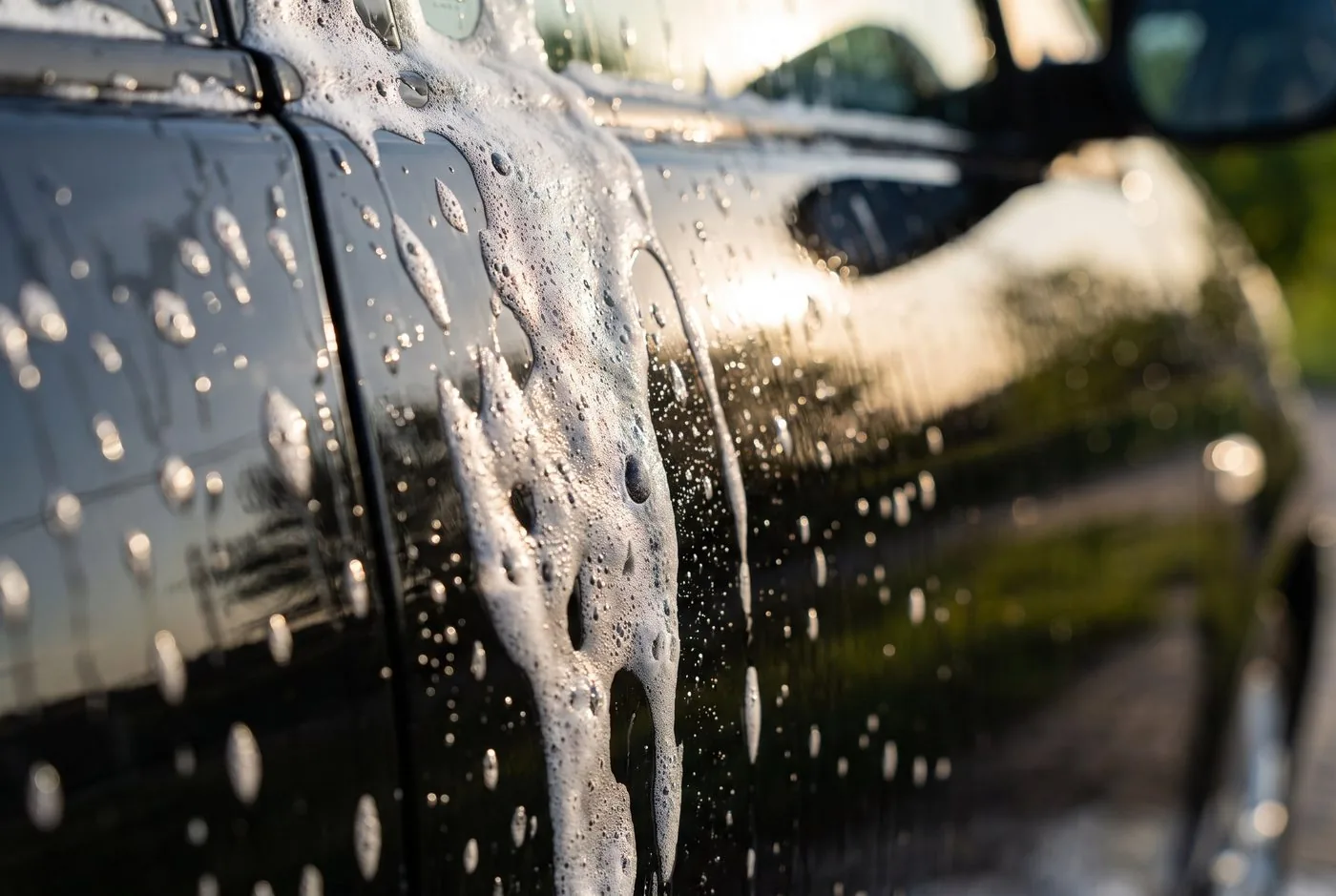
- Wash with a pH-neutral car soap using the two-bucket method
- Dry thoroughly and immediately with a clean microfiber towel — don't let it air-dry, which just recreates the problem
- If spots remain after washing, a dedicated water spot remover (distinct from a general car wash soap) is formulated specifically to dissolve mineral residue without harming clear coat
Dealing with etched spots
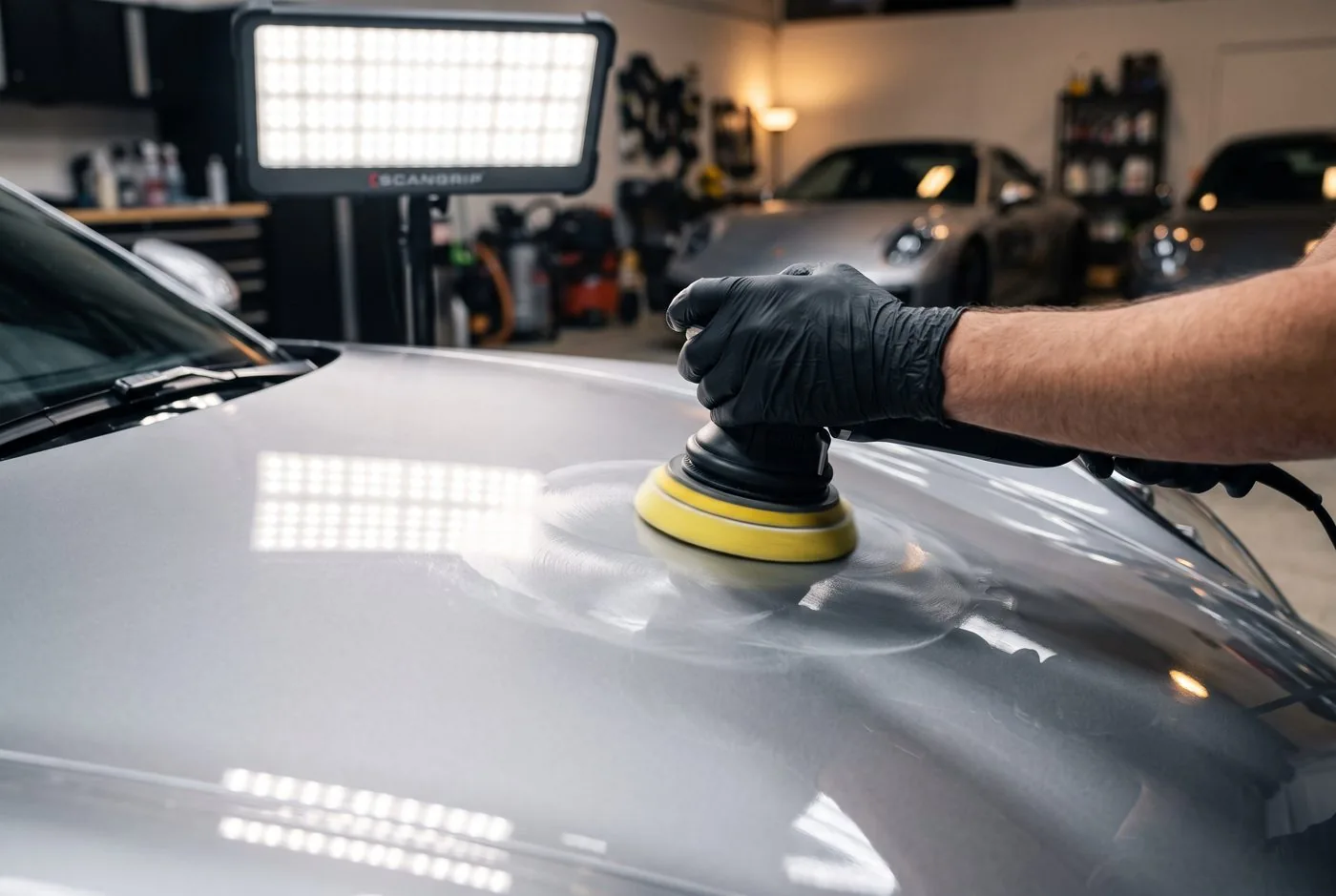
If spots remain visible after a proper wash and dedicated remover — especially if you can feel a slight texture change under your fingertip when running it lightly over the area — the clear coat has likely been affected at a level a wash can't fix. This is where paint correction comes in: a machine polish removes a thin layer of clear coat to level out the etching and restore clarity, the same process used for swirl marks and light scratches.
The line between "annoying spot" and "permanent etching" is often just a matter of how long the water sat before someone got to it.
Preventing water spots going forward
The most effective prevention is simple: dry the car promptly after washing or rain rather than letting water air-dry, especially in direct sun. Beyond that, ceramic coating genuinely helps here — the hydrophobic surface causes water to bead and roll off rather than sheeting flat and evaporating in place, which meaningfully reduces how much mineral residue has the chance to settle on the paint in the first place.
Quick answers
It can, depending on local mineral content — using filtered or deionized water for the final rinse, or drying promptly with microfiber rather than air-drying, reduces the risk regardless of tap water hardness.
Both can cause them, but sudden Texas thunderstorms followed by fast sun-drying are a particularly common cause, since the rainwater doesn't get a proper wipe-down the way a wash would.
More from the Car Care Guide
5 Signs Your Car Needs Paint Correction
The clear signs that a car's paint needs correction rather than just a wash or wax — and how to check for them yourself.
Bird Droppings on Car Paint: Why You Should Never Let Them Sit
Why bird droppings are more damaging to car paint than they look, and the correct removal process before etching sets in.