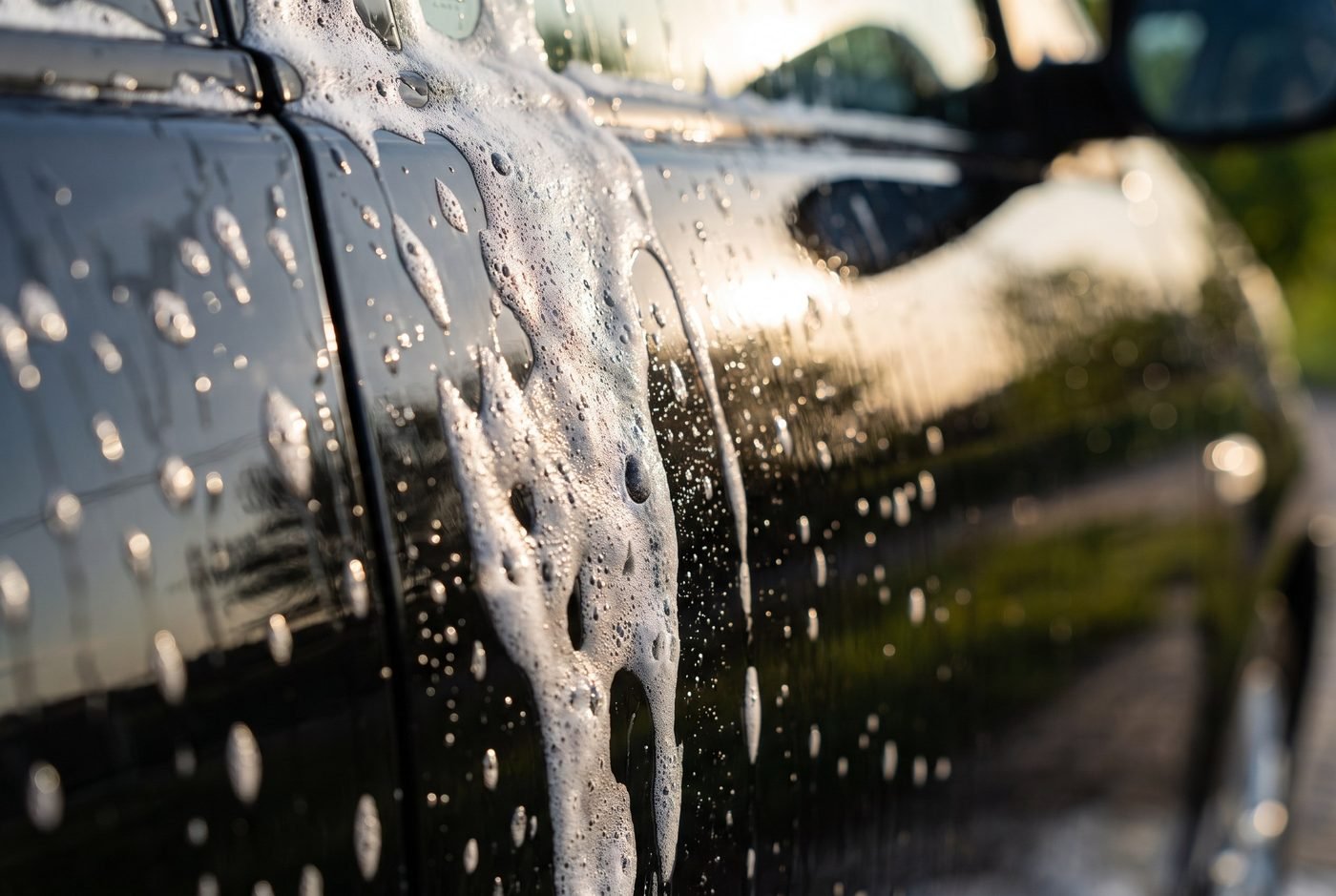
Swirls often come from moving grit across paint during washing or drying. Rinse loose dirt away first, use clean soft tools with ample car shampoo, keep the wash tool out of gritty water, and dry with a clean towel. Work in shade on cool panels; rubbing a dusty dry car is the step to avoid.
Set up before water touches the paint
Park out of direct sun if possible, and let hot panels cool. Ford recommends cool or lukewarm water and a neutral-pH car shampoo; it warns against strong household detergents and washing a hot surface. Set aside separate tools for wheels and bodywork. Brake dust does not belong in the same mitt you use on a hood.
Use a low-friction sequence
- Pre-rinse from top to bottom to move loose dust and sand off the surface.
- Wash wheels with their own tools and a cleaner suitable for their finish.
- Wash the body in small sections, using plenty of shampoo solution. Rinse the mitt often in clean water. A second rinse bucket is helpful, but clean tools matter more than any bucket ritual.
- Rinse thoroughly before soap dries. Repeat a gentle wash on stubborn areas rather than pressing hard.
- Dry with a clean, soft towel using light contact. Avoid a dirty towel that has touched the ground.
What to do with stuck-on contamination
Do not grind a fingernail or wash mitt over sap, tar, or bug residue. Soften and treat those spots with a paint-safe product according to its directions. If the paint still feels gritty after washing, it may need decontamination; our clay treatment guide explains when that is appropriate.
If the car has film or a coating
Follow the actual installer's aftercare instructions. 3M advises hand washing its protection films and a touchless wash if an automatic wash is unavoidable, because brushes can dull film or lift edges. Film instructions do not automatically apply to every coating, but they show why the protection type matters. Tell a detailer what product is on the vehicle before any chemical or machine work.
Already see curved marks under direct light? Washing can prevent more damage, but it does not remove existing clear-coat defects. Read the swirl mark explainer before deciding whether paint correction is worth considering.
Sources and scope
These references support the care and safety guidance above. Follow your vehicle owner's manual and the product or installer instructions for your specific materials; the linked examples are not a substitute for those instructions.
- Ford owner manual: vehicle washing and paint precautions
- 3M: hand-wash guidance for protected surfaces