Interior Care
Full interior car detailing in Dallas: what gets cleaned?
A real interior detail is more than a vacuum and a scented spray. Here is what should be cleaned, when shampoo or steam matters, and what to tell a detailer before you book.
A real interior detail is more than a vacuum and a scented spray. Here is what should be cleaned, when shampoo or steam matters, and what to tell a detailer before you book.
Full interior car detailing cleans the places a quick car wash skips: under-seat areas, seams, vents, carpets, mats, upholstery, dashboards, door panels, glass, and the trunk. Fabric may need shampoo extraction, leather needs material-specific cleaning and conditioning, and pet hair or persistent odors require focused treatment rather than a stronger air freshener.
Packages vary, so use the checklist below when comparing an interior car detailing quote in Dallas. A service does not need to include every restoration task to be worthwhile, but the scope should be clear before the appointment.
This is the difference between a quick interior wipe-down and professional interior detailing. The work follows the dirt into the seams instead of stopping where the eye can see it from the driver’s seat.
“Full interior shampoo” and “steam cleaning” are not interchangeable phrases. Each tool fits a different part of the job.
| Method | Best suited to | What to expect |
|---|---|---|
| Shampoo or hot-water extraction | Fabric seats, carpets, and floor mats with embedded soil or stains | Cleaning solution is worked into the material, then recovered with extraction. Drying time depends on the material and moisture used. |
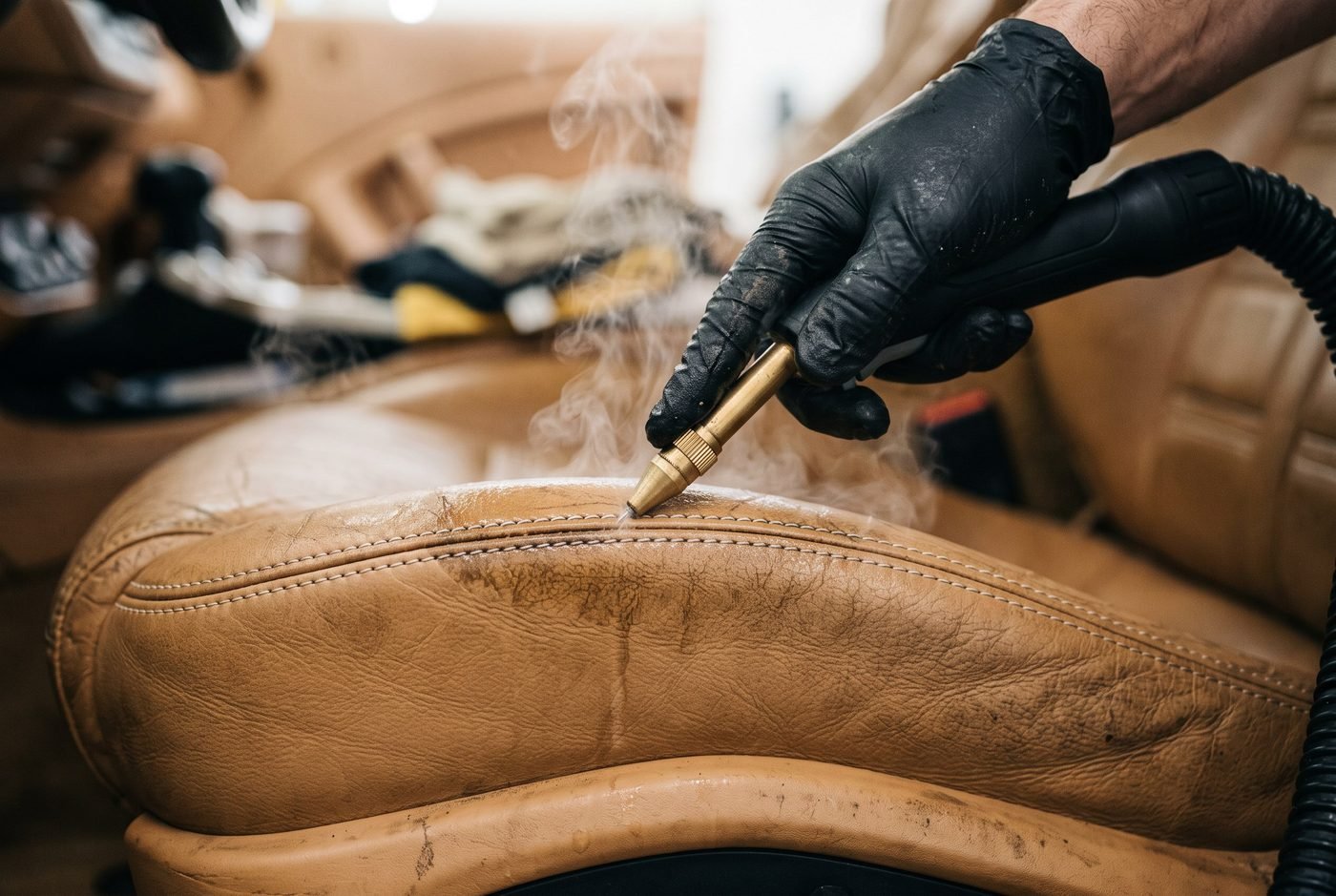
| Steam cleaning | Hard surfaces, seams, vents, buttons, and selected material-safe areas | Heat and low moisture help loosen grime in tight areas. It is not a substitute for extracting a heavily soiled carpet. |
| Dry vacuuming and brushing | Dust, crumbs, loose debris, and pet hair that has not bonded to the fibers | Fast and low-moisture, but it may not remove stains or hair worked deep into carpet weave. |
A careful technician chooses the method after looking at the material, stain, and moisture risk. More water is not automatically a better clean. On a hot Dallas day, poor drying can leave an interior damp longer than expected.
Leather seats collect body oils, dust, sunscreen, and grime in the grain and stitching. The safe approach is a material-specific cleaner, a soft brush or towel, controlled moisture, and a finish appropriate for the leather or coated surface.
A thick, shiny layer of conditioner is not the goal. Too much product can leave the seat slick and attract more dust. For a home-care version of the same question, read how to clean leather car seats without cracking them.
Dog and cat hair can wrap around carpet fibers and collect under seat edges where a household vacuum barely reaches. The practical sequence is to loosen the hair with rubber tools or brushes, work in small sections, then vacuum repeatedly. Compressed air can move hair out of seams, but it also moves debris around, so the final vacuum pass matters.
Tell us about pet hair before requesting a quote. It changes the amount of labor, especially when hair is pressed into fabric or mixed with mud. The pet hair removal guide explains why this is usually a separate task rather than a five-minute add-on.
Odor is a clue, not a surface. Food residue, spilled drinks, wet carpet, smoke film, pet accidents, and mildew each point to a different cleaning problem. Spraying fragrance into the cabin can make the smell harder to diagnose and often wears off before the source is removed.
A realistic odor plan includes cleaning the material that holds the smell, checking mats and carpet beneath them, treating touch points, and drying the interior properly. Deep smoke and mildew odors can be persistent. No honest provider should promise that every odor disappears in one visit. See how car odor removal works for a more detailed breakdown.
Interior surfaces sit behind glass while the vehicle is parked. Leather, vinyl, plastics, and fabric all experience repeated heat cycles, dust, sunscreen, and direct sun. The National Weather Service lists normal July and August highs at DFW near 96°F, so a clean interior still benefits from shade, ventilation, and sensible surface care. Review the DFW climate normals.
That does not mean every Dallas interior needs a restoration service. A lightly dusty commuter car may need a maintenance clean. A family SUV with food spills, pet hair, or set-in stains needs a deeper scope. Matching the service to the condition is how you avoid paying for work you do not need.
Our appointment preparation checklist covers the small things that save time without asking you to clean the car before paying someone else to clean it.
Choose a full interior service when the problem is spread across the cabin: dull surfaces, built-up dust, stained fabric, dirty mats, hair, or a smell that keeps returning. If only one issue is present, ask whether a focused treatment is enough. A good quote should reflect the actual problem.
To request a Dallas-area option, use the quote form and include your vehicle type, ZIP code, condition, and the work you want. You can also start with the Dallas service area or browse nearby DFW communities.
Usually vacuuming, cleaning hard surfaces and glass, material-specific seat and carpet care, and a final inspection. Shampoo, pet-hair removal, and odor work should be confirmed for the vehicle’s condition.
Shampoo extraction suits many fabric seats, carpets, and mats; steam is useful for selected hard surfaces, seams, vents, and touch points. The material and problem determine the safer choice.
Often, yes, but both require focused work. Embedded hair and deeply set smoke or mildew odors may need extra time or more than one treatment.
Tell us whether you need a routine clean, full interior shampoo, pet-hair removal, or odor treatment.