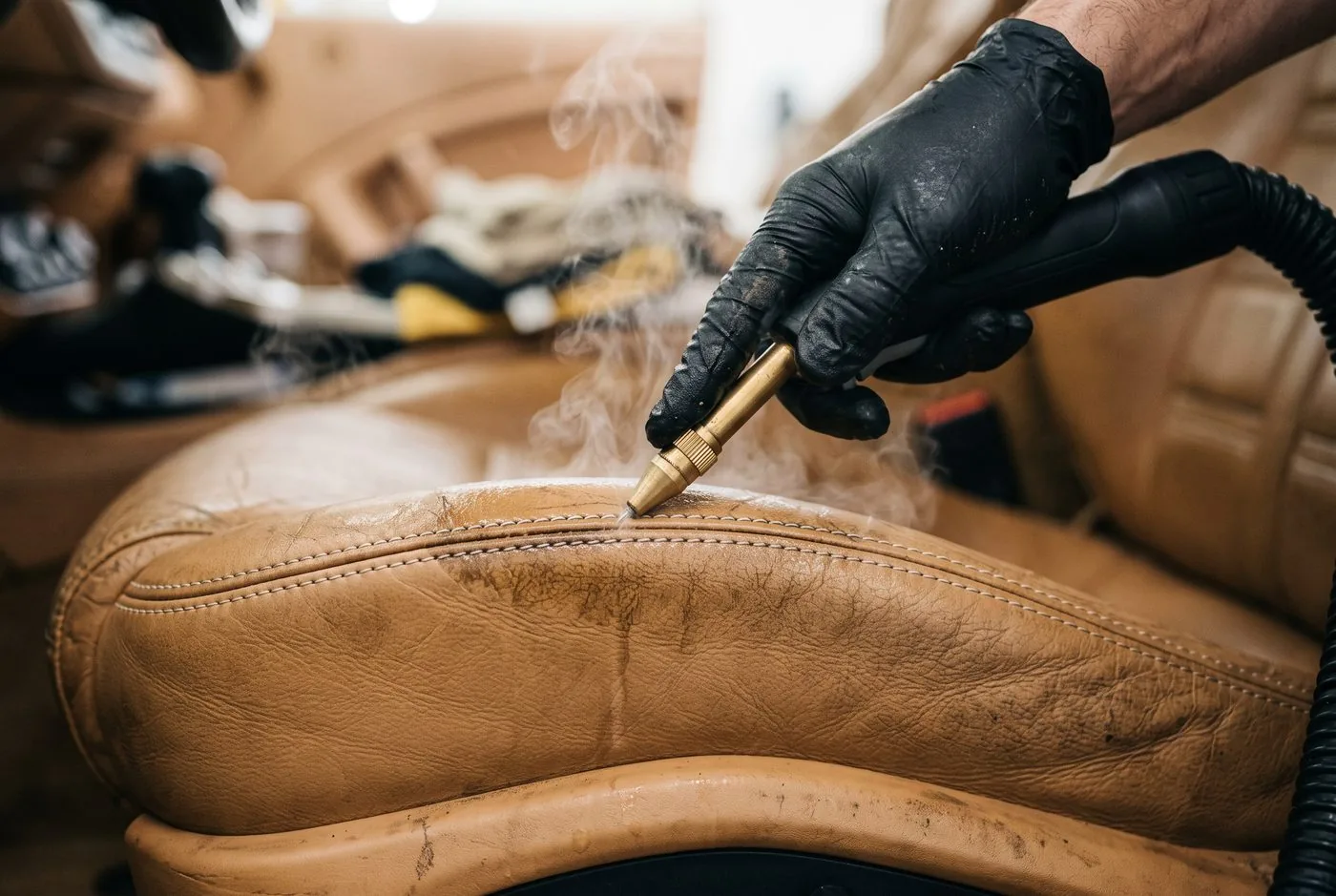
For sunscreen marks inside a car, identify the surface and follow the vehicle manual before applying cleaner. Use a small concealed test area and stop if color transfers or the finish changes. White residue may be removable; a tacky, peeling, or discolored coating needs assessment rather than harder scrubbing.
Record the mark before adding another product
A pale handprint on a dark door panel and a patch on a fabric seat may have the same origin but need different care. Photograph the affected area in ordinary light. Note whether it is on leather, synthetic upholstery, plastic, fabric, or a control surface. If you know the sunscreen product, keep that information available for the detailer.
Also write down what has already touched the mark. An alcohol wipe, degreaser, brush, or household stain remover can change the assessment. Reporting those attempts is more useful than describing the stain as “stubborn.” It helps a provider distinguish remaining residue from a finish that may already be damaged.
Follow the instructions for the actual material
Tesla's Model S manual, for example, calls for prompt cleaning of sunscreen contact on the steering control with a soft cloth and a mild non-detergent cleaning mixture. That is a model-specific example, not approval to use the same mixture throughout every vehicle.
Check your own manual, including restrictions for screens, lighting, airbags, seat belts, and special upholstery. Keep cleaner off controls and openings. If the manual specifies a product or forbids a chemical, that instruction takes priority over a general online cleaning recipe.
Test gently, then reassess
- Remove loose dust first. Avoid rubbing grit into the material while working on a small mark.
- Use only a compatible method. Apply the minimum product called for by the vehicle or cleaner instructions.
- Test a concealed area. Compare the color and sheen after it has dried before treating the visible mark.
- Stop when the surface changes. Color on the cloth, peeling, or a different sheen is a reason to pause and request assessment.
Do not treat a steering wheel like a seat cushion. It needs a clean, secure grip. A dressing that leaves a slippery film is unsuitable there. Likewise, do not spray a fabric-cleaning solution across a door panel and assume every nearby switch or trim piece can tolerate it.
Is the remaining patch a stain or damaged finish?
A photo alone may not settle that question. Ask the provider to explain what it can assess before promising removal. Cleaning and material repair are separate scopes. If a coating has changed color or started to lift, extra cleaning may not restore it.
The Lexus leather-care bulletin warns that abrasive cleaning can damage the protective topcoat. Its instructions apply to the materials and vehicles it covers; the broader reason to read it is to understand why more force is not a reliable answer to every mark. For seats with holes, also see perforated-seat care.
What to include in an interior-cleaning request
State the vehicle and trim, the affected surface, how long the mark has been present, and any previous cleaning attempts. Ask whether the quote covers a test spot and what happens if the provider identifies finish damage. Request interior detailing for cleaning assessment; do not assume it includes re-dyeing or upholstery replacement.
To reduce repeat transfer, allow sunscreen to absorb and remove excess from your hands before touching interior controls, while following the sunscreen's own use directions. Keep a clean cloth available for prompt care using the vehicle manufacturer's method. If the surface still changes, pause and ask for material-specific advice.
Sources and scope
This editorial guide helps you prepare questions for a provider. Follow your own vehicle manual and the actual product instructions. References do not imply that SJ Dallas is certified by, affiliated with, or an installer for these brands.