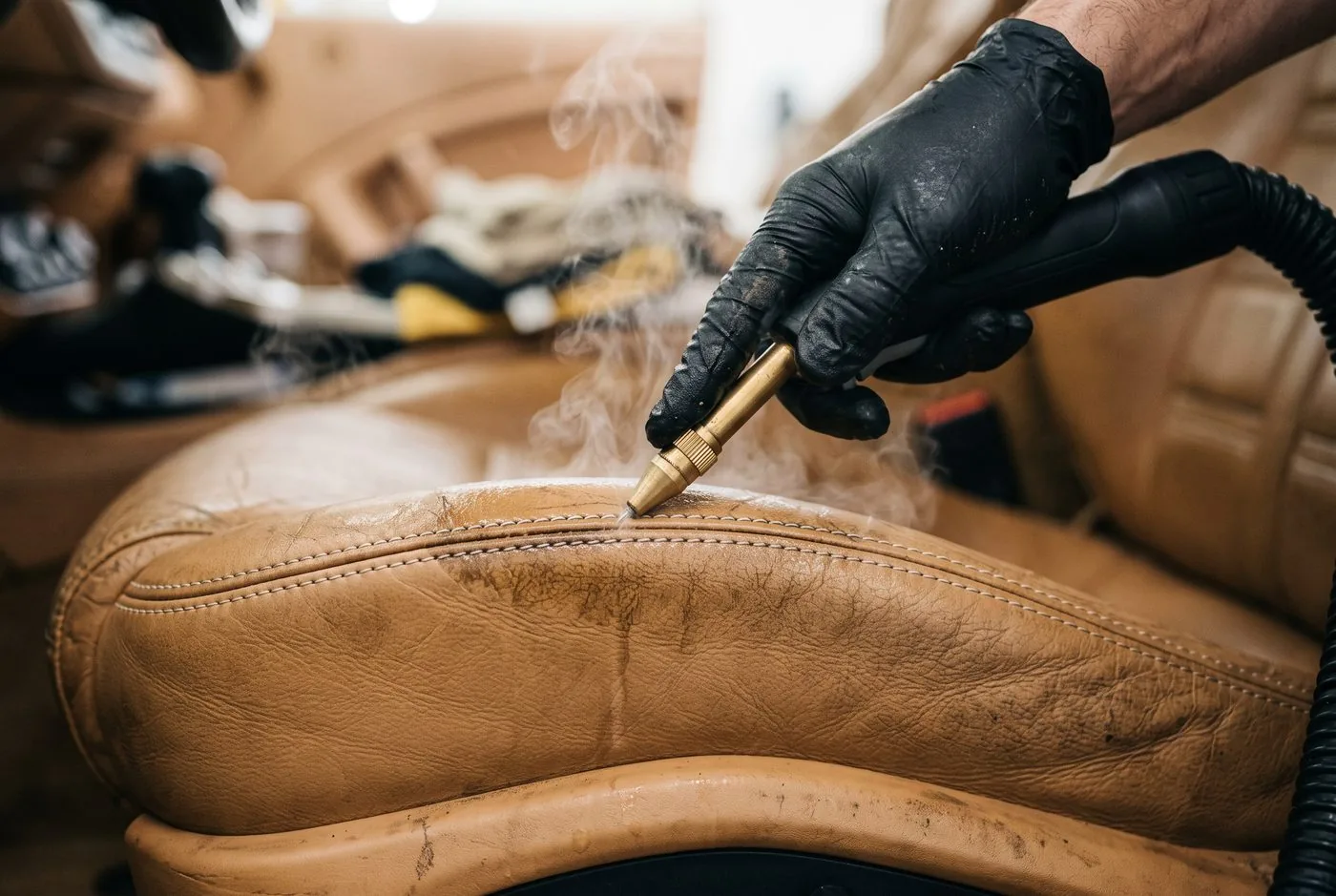
Perforated car seats need material-specific cleaning with controlled moisture. Identify whether the upholstery is leather or synthetic, remove loose debris gently, and follow the vehicle manual. Avoid flooding the holes with cleaner. A spill that has reached padding or seat electronics needs assessment beyond a surface wipe.
Identify the seat before choosing a cleaner
A pattern of small holes does not identify the upholstery. Look up the vehicle's trim and care instructions. Synthetic seating can resemble leather, and a product labeled for leather is not automatically approved for every imitation material, coating, or ventilation system.
Tell the detailer whether the seat is heated or ventilated and whether any function has changed since the spill. Do not remove seat hardware or disconnect wiring to reach a stain. Ask a qualified vehicle professional about faults or liquid that may have reached electrical components.
Start with loose debris and a small test
For routine surface soil, ask about a gentle vacuuming pass before any wet work. A provider should choose tools that suit the material rather than scrape holes with a sharp pick. A tiny opening is not an invitation to push a stain deeper into the seat.
Test the proposed cleaner on an inconspicuous part of the same material. Wait for the test area to dry and compare its color, texture, and sheen. If there is color transfer or the finish changes, stop. Our leather-seat guide explains the wider material-care questions.
Why does moisture control matter?
Lederzentrum's perforated-leather instructions recommend putting a small amount of cleaner on a cloth rather than spraying the seat directly. They also warn that excess care product can collect in holes or pass through to the padding. Follow the specific vehicle and product instructions for your seats; this example is not a recommendation to buy or apply a particular conditioner.
For a quote, ask how the provider intends to control liquid around perforations, seams, and switches. “We steam every seat” is not enough information about compatibility. If extraction or steam is proposed, ask why the method fits this material and what limits will be observed.
What if milk, coffee, or food entered the holes?
Describe the spill, the amount as accurately as you can, and how quickly it was blotted up. Do not promise yourself a surface clean will reach material underneath. Tell the provider if odor returns when the cabin warms or if the affected seat remains damp.
Ask for a scope that separates reachable upholstery cleaning from inspection or repair of the underlying seat. If disassembly is needed, establish who is qualified to do it and whether it is included. A detailing referral does not automatically include upholstery repair or electrical diagnosis.
A handover checklist for the affected seat
- Compare the cleaned area with the surrounding material under ordinary light.
- Ask what remains and whether it appears to be soil, staining, or finish damage.
- Confirm the drying instructions and when the seat can be used.
- Get a follow-up contact if dampness or odor persists.
Photograph existing wear before the appointment and point out repairs, peeling, or cracked material. That gives both parties a clearer starting point. Avoid approving a guarantee that every stain will disappear; the actual material and contamination determine what cleaning can achieve.
Request the right interior assessment
Include your make, model, year, trim if known, which seat is affected, and whether the problem is routine grime or a specific spill. The interior detailing page covers other cabin services. If the problem is moisture in the floor rather than the seat, use the separate carpet drying checklist. SJ Dallas Auto Detailing routes quote requests; the performing provider confirms suitability and scope.
Sources and scope
This editorial guide helps you prepare questions for a provider. Follow your own vehicle manual and the actual product instructions. References do not imply that SJ Dallas is certified by, affiliated with, or an installer for these brands.