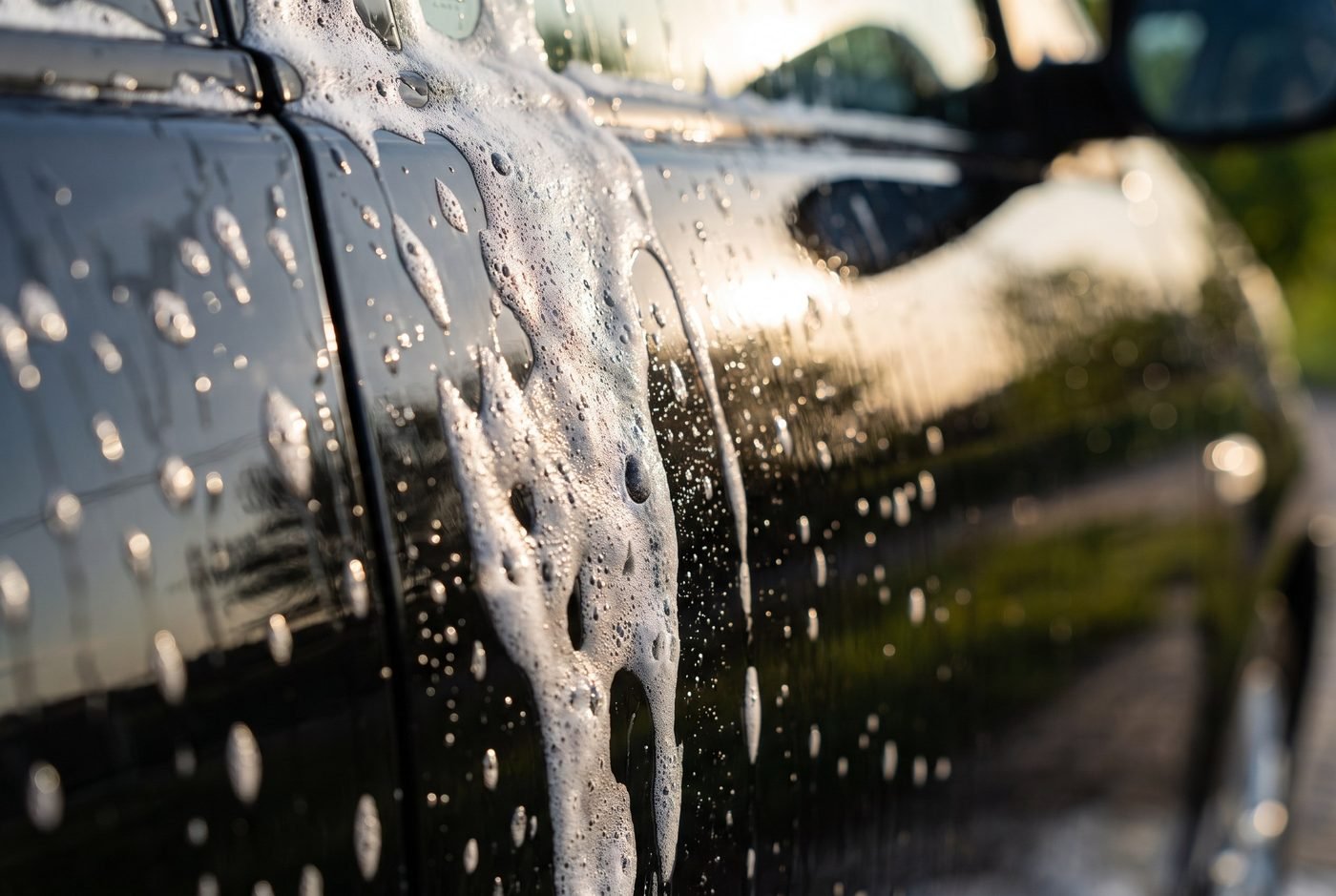
Remove bug splatter and tar promptly, but do not scrape or scrub dry paint. Wash loose dirt away, soften the residue with a product approved for the surface, and use light passes with a clean soft cloth. If it stays attached, stop and choose a dedicated paint- or film-safe remover rather than adding pressure.
Why waiting makes the job harder
Ford's exterior care guidance says to remove insect deposits and road tar promptly because they can damage paint or trim over time. Heat and sun can bake residue onto a front bumper or rocker panel. When you notice fresh residue after a highway trip, a careful wash is more useful than waiting for the next full detail.
Check the surface first
Is it painted metal, unpainted plastic, a matte finish, a wrap, or paint protection film? Each may have different approved cleaners. Test any remover in a small, inconspicuous area and follow its label. If the car has film, 3M advises softening contaminants and avoiding rough scrubbing or abrasive tools. Do not use a solvent merely because it worked on another car.
A safe sequence
- Let the panel cool in shade. Rinse away sand and loose grit.
- Wash with vehicle shampoo and plenty of water. Do not wipe a dry panel.
- Apply the appropriate bug or tar product to the affected area as directed. Allow only the specified dwell time; do not let it dry on the panel.
- Use gentle contact and rinse thoroughly. Repeat cautiously instead of pressing harder.
- Dry with a clean towel and inspect in good light. Reapply compatible protection if the treatment removed it.
Know when to stop
If a mark remains after the residue is gone, it may be staining or etching rather than attached contamination. More scrubbing can create scratches. A professional can distinguish bonded material from damage that needs paint correction or repair. For tree sap, see our separate removal guide; sap requires its own careful treatment.
Sources and scope
These references support the care and safety guidance above. Follow your vehicle owner's manual and the product or installer instructions for your specific materials; the linked examples are not a substitute for those instructions.