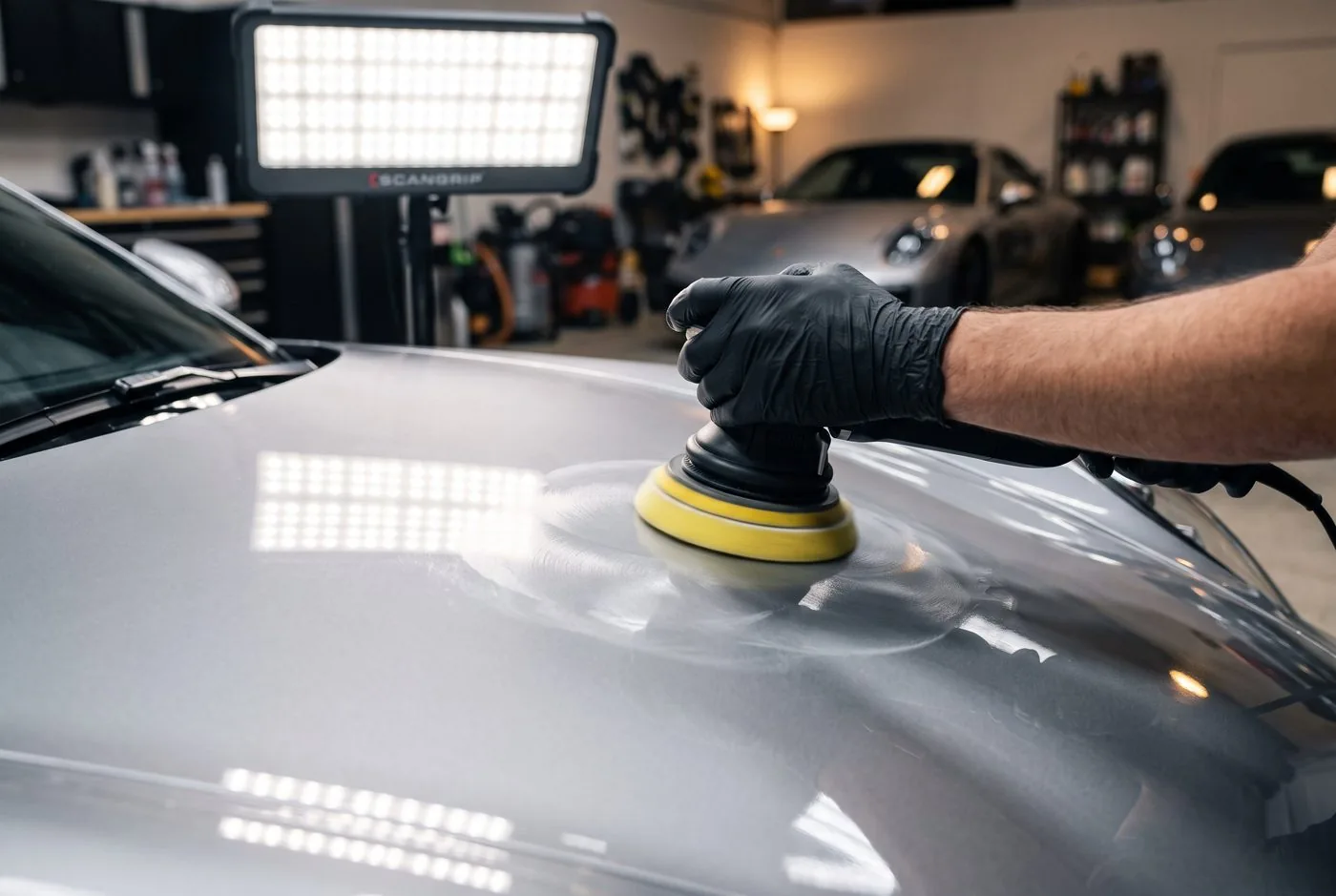
Paint overspray may need decontamination, polishing, or a specialist repair assessment depending on the material and affected surface. Photograph it, identify the likely source if known, and ask for a small test area before approving treatment. Do not start with household solvents, sanding, or scraping.
Record where the overspray landed
Fine specks after nearby painting are a useful clue, but they are not a complete diagnosis. Note when you first noticed them, where the vehicle was parked, and whether nearby work involved paint or another sprayed material. Photograph the panels in light that makes the specks visible.
List every affected surface, including glass, trim, wheels, paint protection film, and body panels. A treatment suitable for one surface may be inappropriate for another. Tell the provider about a ceramic coating, a wrap, or recent body repairs before it chooses a method.
Can clay remove paint overspray?
Detailing clay is one established option for bonded surface contamination. Meguiar's lists paint overspray among the contaminants its Smooth Surface Clay Kit is intended to remove. I-CAR also discusses clay in overspray-removal guidance. Neither fact establishes that all overspray on every vehicle can be safely removed with the same process.
Ask for a test on a limited area and an inspection afterward. The useful question is whether the contamination comes off while leaving an acceptable finish. Ask the provider to show the result before extending the treatment across the vehicle. For background, read what clay treatment does.
Why might polishing be a separate quote?
Decontamination and polishing solve different problems. The first addresses material on the surface; polishing addresses suitable defects in the finish. Do not assume a clay treatment includes full paint correction or that every remaining mark is still overspray.
Ask what the test revealed and whether additional work is optional or necessary for the proposed result. If polishing is recommended, discuss the affected panels, prior repairs, and the desired finish. Our paint-correction quote checklist helps separate those line items.
When should you stop and seek specialist advice?
Do not experiment with paint thinner, a razor, or sandpaper on a finished panel. If the vehicle has matte paint, a wrap, exposed or damaged clearcoat, or a recent refinish, get material-specific instructions. A generic overspray tutorial does not override the finish maker's requirements.
If there may be an insurance or responsibility question, preserve the photos and ask the relevant party what documentation it needs before authorizing a large treatment. This guide does not determine who is liable or whether a claim is covered.
Four questions to put in the work order
- What material and surfaces are you treating? Identify what is known and what still needs inspection.
- What does the test spot show? Agree how the result will be reviewed before wider treatment.
- What is included? Separate washing, decontamination, polishing, and any follow-up protection.
- What may remain? Record limits and the point at which specialist repair would be recommended.
Also ask about care after the work and whether any existing protection needs attention. Do not assume removing contamination leaves a coating, wax, or film unchanged.
Describe the problem before selecting a package
A useful request states the vehicle, city, affected panels, suspected source, how long the contamination has been present, and previous removal attempts. Request an assessment through paint correction options or exterior detailing. SJ Dallas Auto Detailing is a referral service; the provider handling the vehicle confirms the method and price after reviewing the condition.
Sources and scope
This editorial guide helps you prepare questions for a provider. Follow your own vehicle manual and the actual product instructions. References do not imply that SJ Dallas is certified by, affiliated with, or an installer for these brands.