Ceramic Coating
Is ceramic coating worth it in Dallas heat?
Short answer: for most vehicles that live outside through a Texas summer, yes — but only if you understand what it actually does. Here's the honest version.
Short answer: for most vehicles that live outside through a Texas summer, yes — but only if you understand what it actually does. Here's the honest version.
Search "ceramic coating" and you'll find a lot of confident claims — permanent shine, scratch-proof paint, one coating for life. Most of it overstates what the product actually does. This isn't that article. It's a straight look at what ceramic coating protects against, what it doesn't, and whether the cost makes sense for a vehicle that's going to spend the next several summers parked in North Texas sun.
Dallas has a humid subtropical climate with genuinely long, intense summers. July and August average highs sit close to 96°F, and most years bring a stretch of days at or above 100°F — some years considerably more, based on National Weather Service records for the area. Layered on top of that is UV exposure: Dallas summer UV index readings commonly land in the "Very High" to "Extreme" range (9–11), which is a meaningfully harsher environment for exposed clear coat than a milder, cloudier climate would produce.
Over years of that kind of exposure, unprotected clear coat gradually oxidizes and fades, and contaminants like tree sap, bird droppings, and mineral deposits from rainwater have more opportunity to etch in before a wash gets to them.
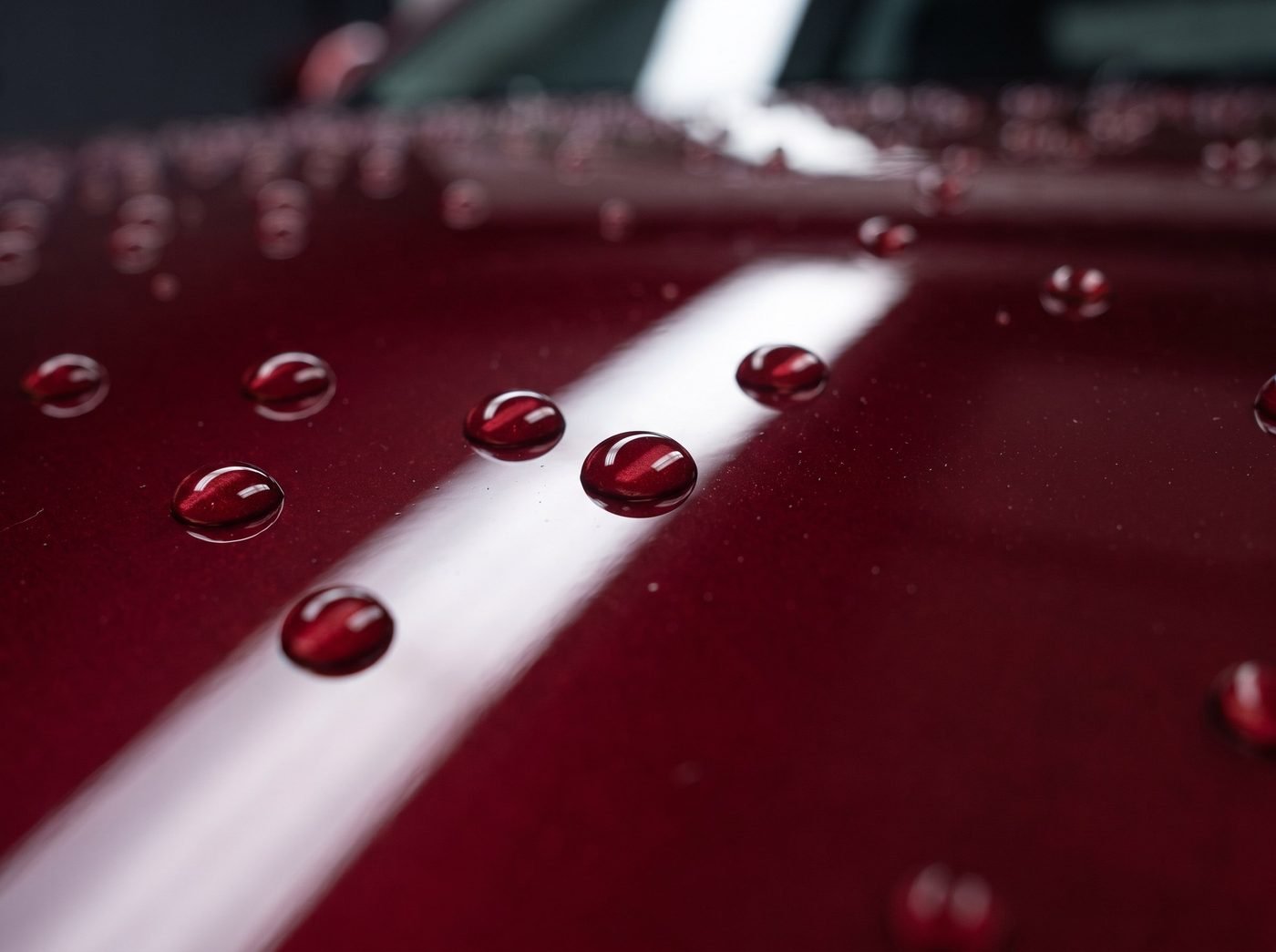
Ceramic coating is a liquid polymer — typically silicon dioxide based — that chemically bonds to the clear coat and cures into a thin, hard, hydrophobic layer. Once cured, it changes three things in practical terms:
This is where marketing usually overreaches, so it's worth being direct:
For a vehicle that's parked outdoors through Dallas summers rather than garaged, the UV resistance and easier maintenance genuinely add up over a few years — less fading, less time spent scrubbing, and better long-term gloss retention than paint left completely unprotected. It's a maintenance decision, not a cosmetic upgrade with magical scratch-proofing attached. If the goal is protecting a new vehicle's paint from years of Texas sun, it's a reasonable investment. If the goal is avoiding rock chips on the highway, that's a different product entirely.
Coating protects paint the way sunscreen protects skin — it meaningfully slows damage over time, it doesn't make the surface indestructible.
No — it protects exterior paint, not cabin temperature. Window tint and sunshades are what actually address interior heat.
Professional-grade coatings are commonly rated from around 2 to 5+ years depending on the product line, though sustained UV and heat exposure can shorten real-world durability without regular maintenance washing.