Interior Detailing Checklist: What Actually Gets Cleaned (Step by Step)
"Interior detailing" means very different things depending on who's doing it. Here's what a thorough job actually covers, step by step.
"Interior detailing" gets used loosely — sometimes it means a genuine deep clean, and sometimes it means a fifteen-minute vacuum and wipe-down marketed at full-detail pricing. Knowing what should actually be included helps you evaluate any quote, from us or anyone else.
Step 1: Full removal and initial vacuum
A real interior detail starts with removing floor mats and any loose items, then a thorough vacuum of seats, carpets, floor mats, trunk, and every crevice — under seats, between seat tracks, in door pockets, and cup holders. This first pass pulls out loose debris before any wet cleaning, which matters because wet-cleaning over loose dirt just grinds it deeper into fabric.
Step 2: Deep extraction for carpets and upholstery
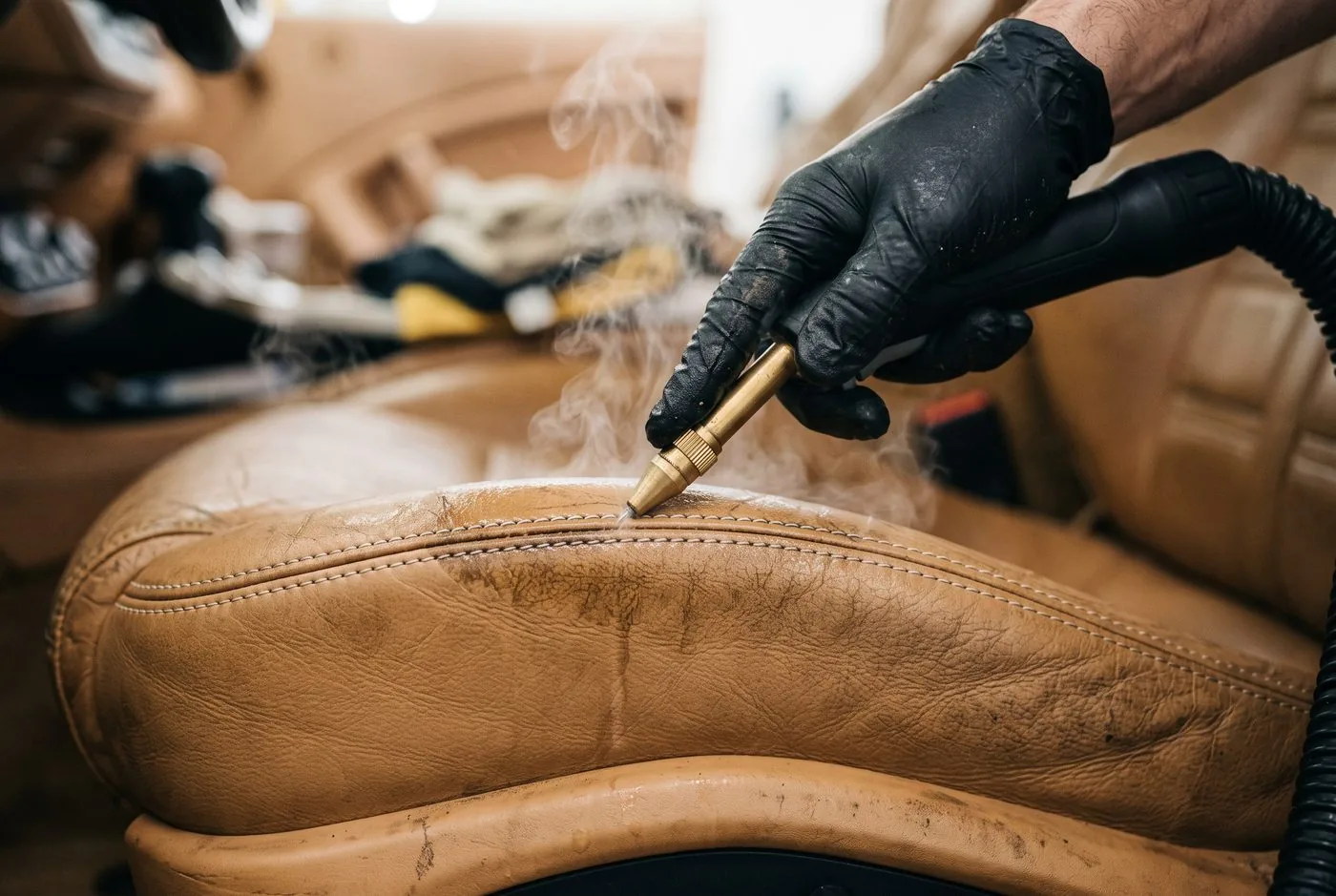
Beyond surface vacuuming, embedded dirt and stains in carpet and cloth upholstery typically need hot water extraction or steam cleaning — a process that agitates and lifts ground-in debris that a vacuum alone can't reach. This step is often what separates a genuine deep clean from a quick tidy-up.
Step 3: Leather cleaning and conditioning (if applicable)
Leather seats need a different process than cloth — a proper leather cleaner to lift oils and grime from the surface and stitching, followed by a conditioner to replace moisture the leather loses over time. This matters especially in Texas heat, where cabin temperatures in direct sun regularly exceed outside air temperature and accelerate leather drying and cracking if it's not conditioned regularly.
Step 4: Dashboard, console, and trim detailing
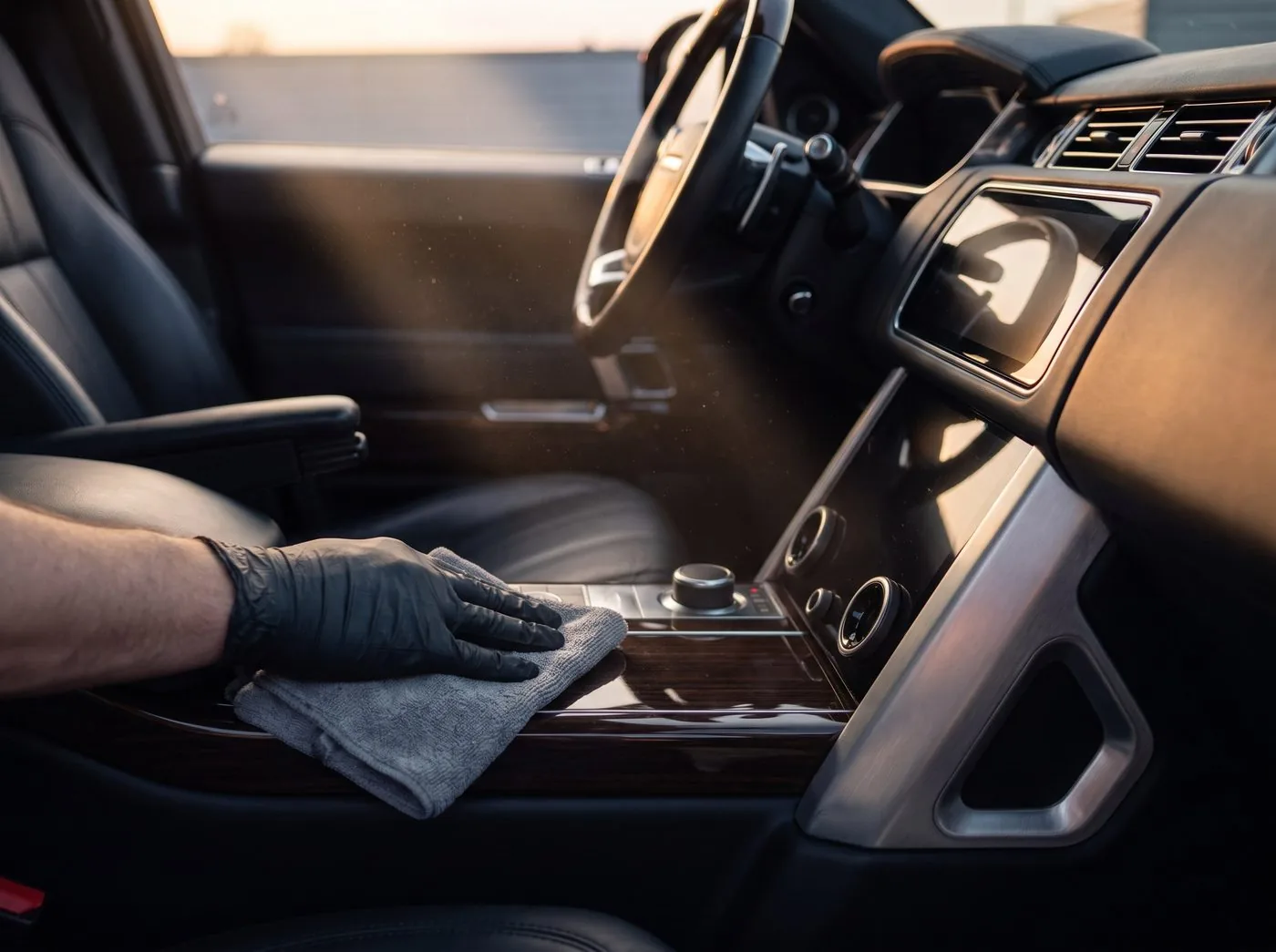
Every hard surface — dashboard, center console, door panels, vents, and trim — gets wiped down and treated with an appropriate protectant. Air vents in particular accumulate dust that a general wipe-down often misses; proper detailing gets into those narrow gaps with small brushes or detailing tools.
Step 5: Glass cleaning, inside and out
Interior glass gets a genuinely streak-free clean using a proper glass cleaner and microfiber — not the same towel used on the dashboard, which can leave a hazy residue on glass that's especially noticeable under direct sunlight or headlights at night.
Step 6: Odor treatment (when needed)
If a vehicle has lingering odor from smoke, pets, or mildew, that typically needs a dedicated odor treatment step beyond standard cleaning — addressing the source (usually embedded in carpet padding or fabric) rather than just masking it with a spray.
Step 7: Final inspection and touch-ups
A thorough job wraps with a final walkthrough — checking for missed spots, streaking on glass or trim, and confirming every surface got attention rather than just the visible ones.
If a quoted "full interior detail" skips extraction and leather conditioning, it's really a wipe-down with a bigger price tag.
How this fits with exterior work
Interior detailing on its own addresses everything above; a full detail pairs it with a complete exterior detail in the same appointment — a common choice for vehicles that haven't had thorough attention in a while. For a car that's due for both, doing them together is generally more efficient than scheduling separate visits.
Quick answers
Yes — a thorough interior detail covers the trunk or cargo area along with the cabin, including vacuuming and wipe-down of those surfaces, not just the seats and dashboard.
Extraction uses hot water and agitation to lift dirt embedded deep in carpet and upholstery fibers, while a standard vacuum only removes loose surface debris — extraction reaches what vacuuming alone can't.
More from the Car Care Guide
How to Clean Leather Car Seats Without Cracking Them
How to clean leather car seats correctly, and why skipping conditioning is the most common cause of cracking in Texas heat.
How to Remove Pet Hair From Your Car
Why a vacuum alone rarely gets it all, and what actually works.