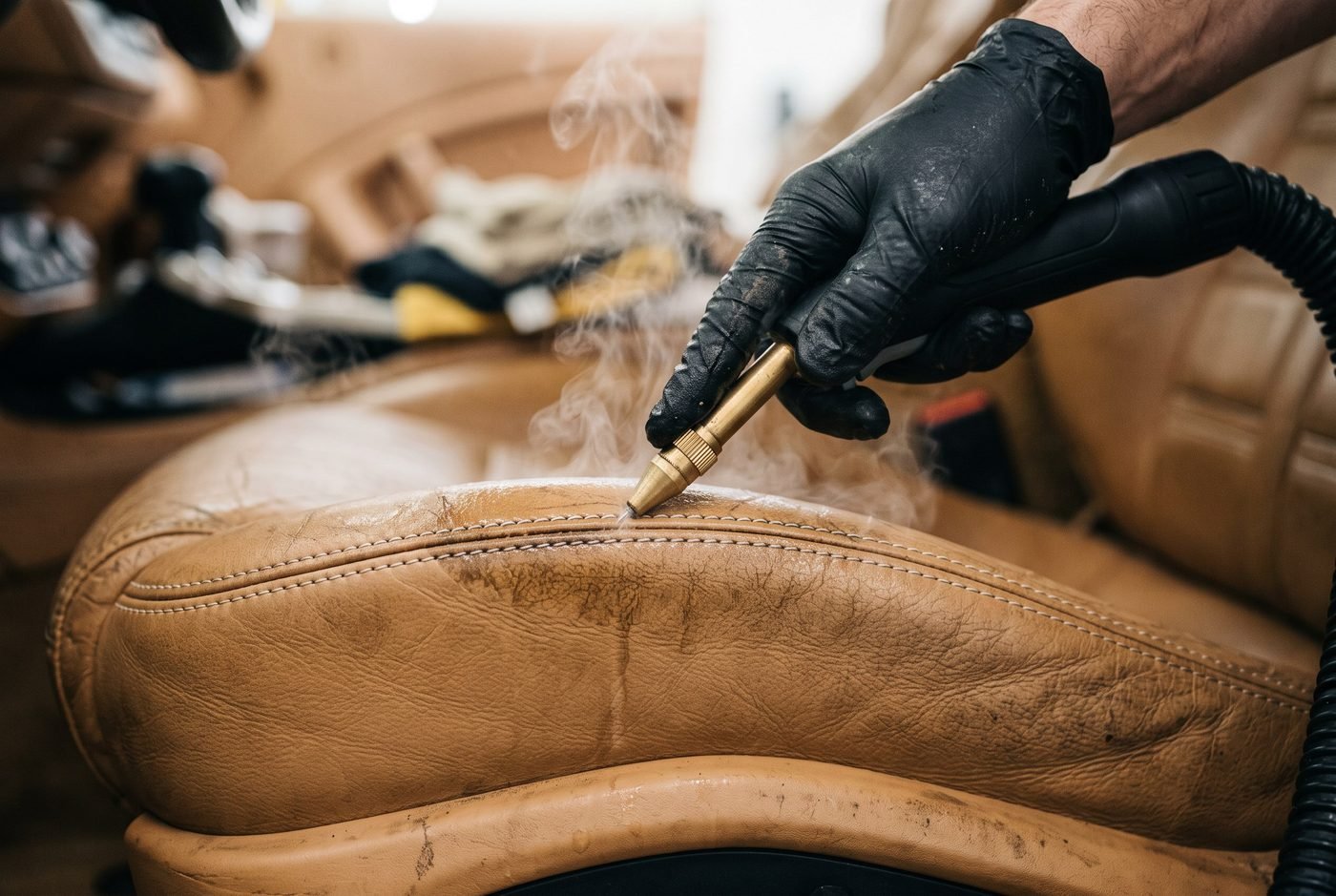
For a cloth seat stain, remove loose material, blot fresh liquid, test a fabric-safe cleaner, and work with limited moisture. Do not flood the cushion. A stain that reaches foam, leaves a large ring, or returns with odor may need professional extraction and thorough drying rather than another round of surface cleaner.
Identify what spilled and what you already used
Coffee, sugary drinks, food oil, and dye do not behave the same way. Note when the spill happened and whether someone already applied a household cleaner. Mixing unknown products can discolor fabric or create residue. Photograph the stain before treatment, especially if you may ask a detailer for help.
Start dry
Vacuum crumbs, dust, and loose debris before adding liquid. For a fresh spill, blot with a clean absorbent towel instead of spreading it across the cushion. Never scrub a seat seam aggressively; damaged stitching is a different problem from a dirty surface.
Use the least moisture that works
Ford's guidance for fabric and carpet recommends a soft damp cloth and mild soap solution, then drying with a clean cloth. It also warns against soaking upholstery and notes that a spot-cleaning ring may require cleaning the whole visible area. Follow your own vehicle's manual first; some seat fabrics, heating elements, and airbag assemblies have specific restrictions.
Test a product on a hidden patch. Apply it to the cloth or tool as directed, not blindly into the seat. Work from the outside of a spot toward the center, lift the soil, and remove cleaner residue. Let the area dry completely before judging the result. A wet seat can temporarily hide remaining marks.
When extraction makes sense
Professional fabric cleaners may be used with an extraction machine that puts down and pulls up solution. The operator still has to prevent saturation and dry the seat. Ask for extraction when a spill covers a broad area or soil has reached deeper fabric. If the stain is permanent dye transfer or the foam remains contaminated, cleaning may improve appearance without erasing it.
What to tell a detailer
Send the stain type, age, seat material, prior products, and any odor. That information makes a targeted interior request more useful. Compare methods in our steam versus extraction guide.
Sources and scope
These references support the care and safety guidance above. Follow your vehicle owner's manual and the product or installer instructions for your specific materials; the linked examples are not a substitute for those instructions.
- Ford owner manual: fabric seat cleaning and water limits
- Meguiar's: professional extraction cleaner use