Fundamentals
Auto detailing vs. car wash: what's the real difference?
They both leave a car looking cleaner. Only one of them actually addresses what's happening to the paint and interior underneath.
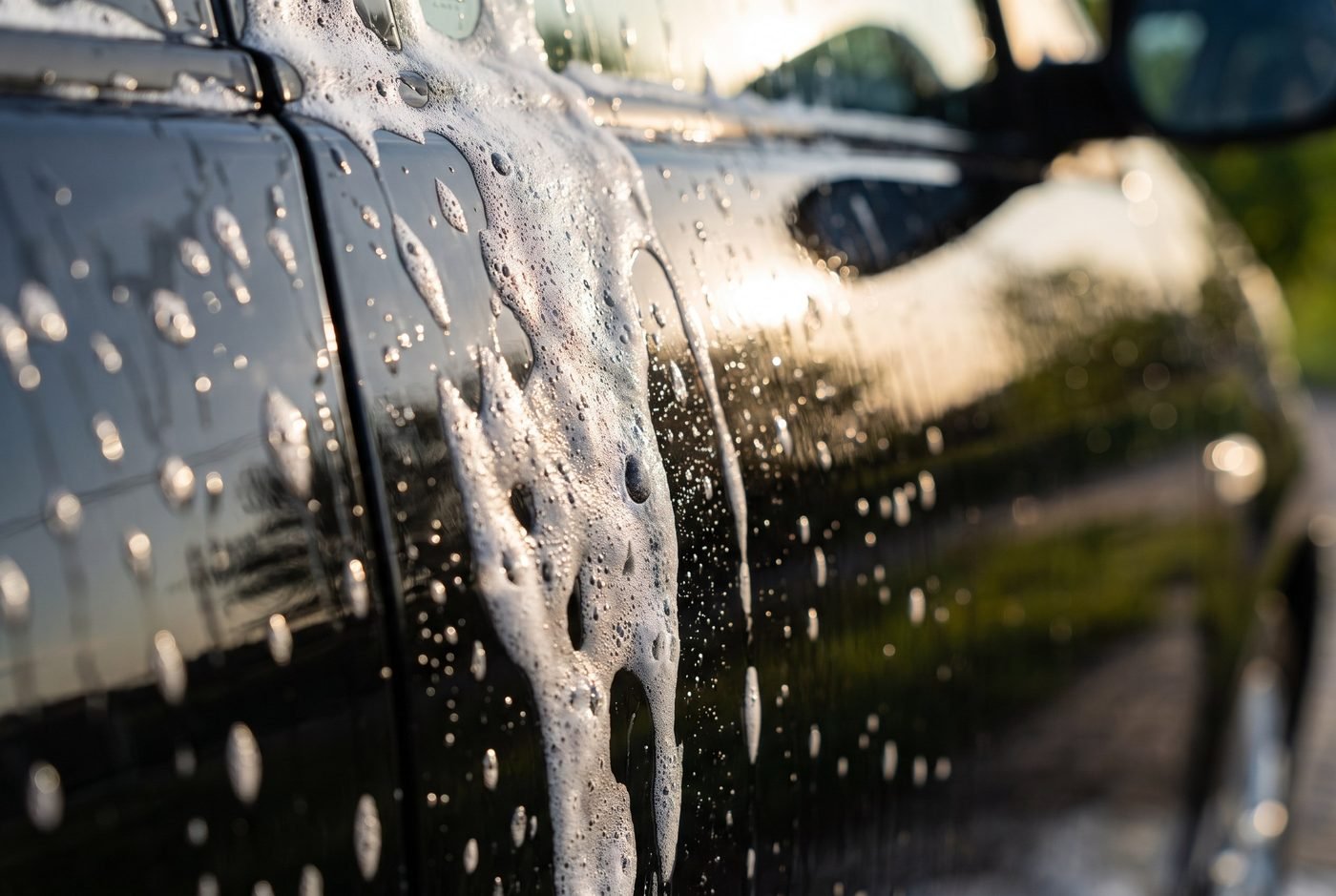
They both leave a car looking cleaner. Only one of them actually addresses what's happening to the paint and interior underneath.
A car wash — whether it's a drive-through tunnel or a quick hand wash — removes surface dirt and gets a vehicle looking presentable in a few minutes. Detailing is a slower, more deliberate process that also addresses paint condition, deep interior cleaning, and protection. Both have their place; they're just not interchangeable.
It's fast and inexpensive, which makes sense for routine upkeep between deeper cleanings. What it doesn't do is address anything below the surface — automated brush washes can actually introduce fine swirl marks into the clear coat over repeated visits.
That's a meaningfully longer process — often two to five-plus hours depending on scope — because it's solving different problems than a wash: paint condition, embedded dirt, and long-term protection, not just visible surface grime.
Think of it in terms of maintenance intervals. A regular wash every one to two weeks keeps loose dirt and contaminants from building up. A full detail every few months handles what a wash structurally can't — restoring paint clarity, deep-cleaning the interior, and refreshing protection. Skipping detailing entirely and relying only on washes tends to show up over a year or two as duller paint, worn-looking interior surfaces, and contamination that's harder to remove the longer it sits.
If the goal is keeping a car looking clean week to week, a wash is enough. If it's been several months since the paint was corrected or the interior was deep-cleaned — or the vehicle spends most of its life parked outdoors in Dallas sun — that's a detailing job, not a wash job.
Tell us about your car's condition and we'll point you to the right option.